Episode Transcript
[00:00:01] Speaker A: If you're looking for the skills and tools to succeed in real estate investing, you've come to the right place.
This show is about breaking through barriers, breaking through limiting beliefs, and breaking through to the life that you want to live through the power of real estate investing. You're listening to the Breakthrough Real Estate Investing Podcast. And now, here are your hosts, Rob Brake and Quinton d'. Souza.
[00:00:29] Speaker B: Welcome back, everybody. Thanks for coming again to listen and hear all of Quinton's world travels that he's been doing, because he certainly doesn't stop long enough for us to do a podcast every month like we're supposed to. So this one. This one, Quentin, is like, three weeks late.
[00:00:46] Speaker C: Yeah, well, I spent three weeks in Costa Rica, so that's. That's it.
[00:00:51] Speaker B: Yeah. Yeah, you should have actually. Well, you tell us about that. You hiked right across the whole country.
[00:00:57] Speaker C: Yeah, I hiked right across.
So from the Atlantic Ocean to the Pacific Ocean, basically 280km over 14 days. It was a lot of fun.
I stayed with locals, you know, sometimes camping, sometimes in people's houses, sometimes in kind of sketchy motels, but it was.
[00:01:21] Speaker B: It was.
[00:01:21] Speaker C: It was a lot of fun. Very beautiful hike through the jungle to, you know, it was. It was a great experience, was with Dave Russell. So shout out to Dave. We had a. Shout out to Dave. We had a great time. And then visited my buddy in Playa Portera for the last.
Wherever it is. I don't know what the hell it's called.
[00:01:43] Speaker B: Potrero means Field or pasture beach.
[00:01:48] Speaker C: Pasture. Pasture beach.
[00:01:50] Speaker B: Yeah. There you go.
[00:01:51] Speaker C: Okay. So, yeah, it was. It was. That was great, too. Got to. To see Jen and I could kind of make out the kids at the table. So that was. That was good. And, yeah, I. I really enjoyed Costa Rica. Beautiful weather and amazing people. So friendly.
[00:02:09] Speaker B: It was fun, man. Let me tell you something. You've got so much energy, it's really hard to keep up with you.
[00:02:15] Speaker C: Oh, get out of here.
[00:02:16] Speaker B: No, seriously. And then you came into the gym that one day and just kicked my. Well, you came three days to the gym with me and kicked my butt.
[00:02:25] Speaker C: Oh, come on. Give me a break.
[00:02:28] Speaker B: You know you did. You saw me.
[00:02:30] Speaker C: No, you were. You. You were doing really well. You're making me feel good here. Give me a break.
[00:02:36] Speaker B: No, but it was really fun to see you. We hung out a lot.
[00:02:39] Speaker C: Yeah. Yeah, we did. I tried to buy people in your gym stuff, and they were, I don't know, just trying to help you out. It didn't work out as Much as I thought. But it was. Yeah, they were just like, who's this weirdo buying me stuff?
[00:02:51] Speaker B: Yeah. Quentin grabs a bunch of energy bars and starts running around the gym going, you want one of these? And everyone's just like, no, leave me alone.
[00:03:00] Speaker C: Yeah, but that. It's okay. It was. That was good and I enjoyed it.
So it was. It was great. And I'm headed to do the west coast trail now with, in a couple weeks with my youngest son and then doing the Altavia one in Italy in July. So that should be. That should be good too. So I got a bunch of stuff on the go and it's always good. But I. I really liked your gym. I thought it was great. And it sounds like you're, you know, you're busy with all your transactions too, down in. In Costa Rica, getting. Getting stuff done. Right?
[00:03:36] Speaker B: Yeah. And I guess I should say this because I don't say it very often, but if you are interested, even if you just like preliminarily wanting to know how things work down here as far as purchasing properties go, please reach out to me. You know, I don't mind. You're not wasting my time or anything like that.
I love sharing all the info that I have. So if you're even curious, just reach out to me and, you know, it's. Robusterbreakthrough ca.
And then, yeah, if you are in the area, come into the gym.
[00:04:06] Speaker C: Absolutely.
Yeah, you can. With all gym with all the gringos. Well, actually, they're not. Most of them are ticos, actually, or local.
[00:04:14] Speaker B: Almost all of our members are local. Yeah, yeah, yeah.
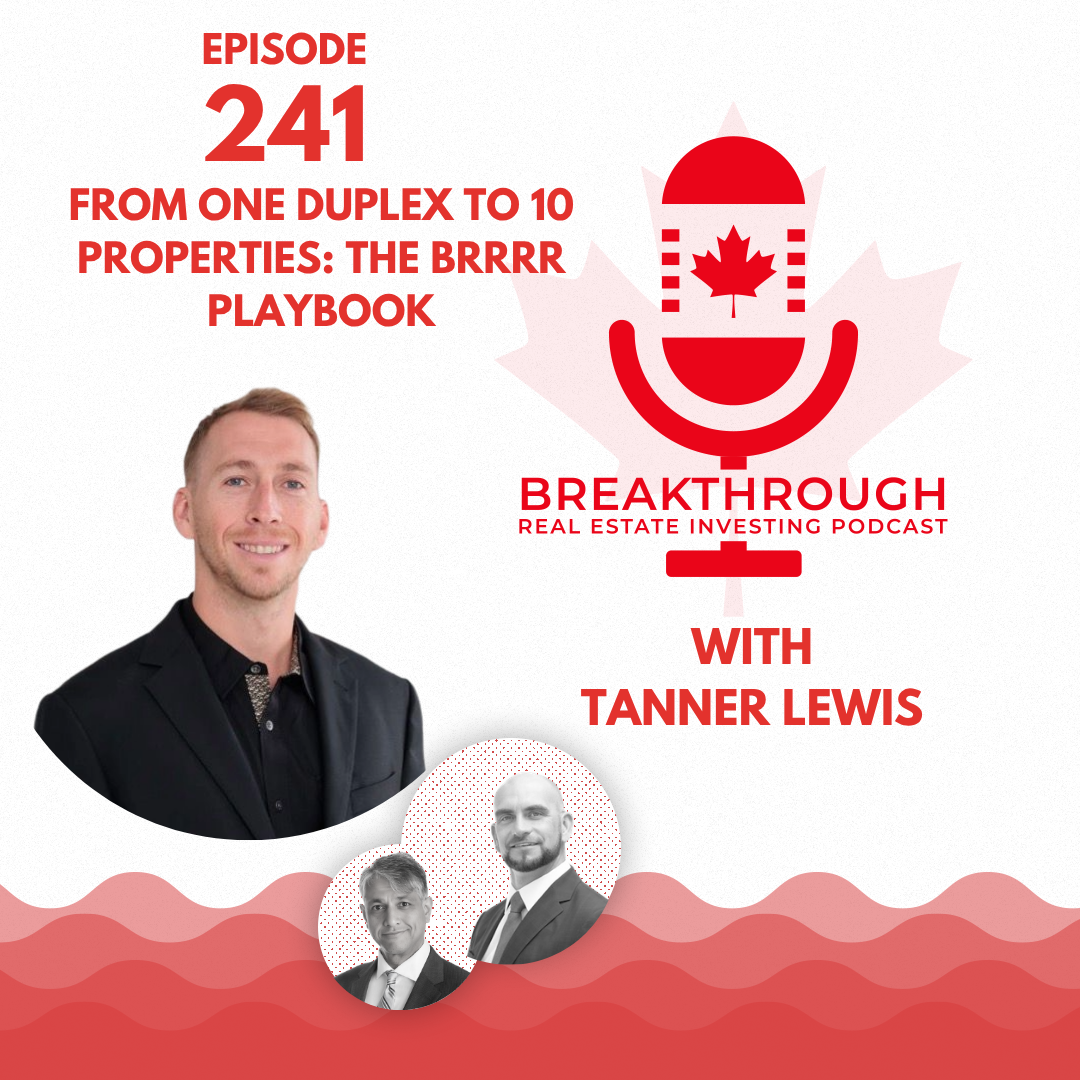
[00:04:18] Speaker C: You know, it's funny, on the hike, I was talking to Dave Russell and he was the one who, who talked about Tanner. So our guest here, because of the work that he did on through Accustome Landscaping, which is Tanner's company, you know, doing some work for him on some projects, which he was really happy about.
And Tanner is also an agent for Century 21 and he has 10 investment propert, between two and four units. He's a member of Durham REI, so he's come out to our events and stuff like that, which has been cool.
And like, I. I like to have on the podcast an active investor. So this will be a good conversation with Tanner Lewis. So looking forward to that.
[00:05:08] Speaker B: Yeah. Welcome to the show, man. Thanks for coming on.
[00:05:11] Speaker A: Thanks for having me. I really appreciate me out here.
[00:05:15] Speaker C: Yeah. So tell us a little bit about yourself, a little bit background, more than what we did there.
Okay.
[00:05:23] Speaker A: Well, I, I got into it, so I pretty Much did everything that you're told to do growing up. So, you know, go to school, get a good job, a safe job, save your money, all that kind of stuff. And then I realized that the rat race wasn't for me working 9 to 5 saving just wasn't working. So that's when I started my landscaping company, started saving money. And then right at the beginning of COVID around 20, 21, I just saw property and kind of went into it very green. Just looked at it, thought like the numbers here look pretty good.
So we ended up buying that property and then from there just bought a few more turnkey properties because I was still trying to grow my business at the time.
And then did some burrs from there, refinanced and was able to continue growing my portfolio until where we sit now at 10 properties. And yeah, it's been a lot of fun.
[00:06:26] Speaker B: So it's interesting because you said basically right at the start of COVID now for most people that would be like the worst time to go and buy something and, and start out as a, as a real estate investor.
So how does that all come about? Because I mean, and it's interesting too, especially if it's your first one. You're just like, yeah, I had a look at it and thought the numbers look good, but how do you work up to even checking out numbers and, and all that kind of stuff at that time?
[00:06:57] Speaker A: Well, I know that the numbers were like everyone was afraid to buy. The interest rates were very, very low. I believe that property, we bought it at 2.1% interest rates and the housing market was plummeting. That's when everybody was scared the banks were giving away money.
So it kind of just came across my Facebook and I said, you know, that looks like a decent opportunity. And we just. That was the first house I looked at. First house we bought, didn't know anything about rental properties, just looked at the costs again and the profit and thought this is where it's going to help us in the long run.
[00:07:34] Speaker C: That's awesome. How did it do, by the way, when you purchased it? Like how is. When we first purchased it, it was
[00:07:40] Speaker A: making 1200amonth and it was very turnkey. But that doesn't include maintenance and vacancy at the time. Again, it was very new. I had no idea about any of that stuff. So it's still doing very well. I still have the property and what I like about it is it's a side by side duplex. So the first house is a story and a half with a basem and the next house is basically a bungalow but it's very, very easy to maintain and they have their own space so we don't hear any complaints ever. Which is amazing.
[00:08:09] Speaker C: Oh, that's really good. So you, you've built this portfolio of properties and they, they pay you every month as long as you're keeping them. Of course, vacancy and filling units is one of the challenges in this environment right now for sure.
Amongst a lot of different, I mean with the type of product that you have, I think that that kind of helps that.
And these, these, these properties all.
Are they all cash flow positive? Had you, have you had any problems over the last couple years or is this, you know, is this just like churning up money for you and you know, you're, you know. Well no, you can, like if you, if like if you have low debt on, on prop property you and it's cash flow positive, you're, you know, you can be doing well.
[00:09:03] Speaker B: Yeah, a lot of no problems just chugging along cash machines, right.
You just go to them and punch in your PIN number and it spits out the money every month.
[00:09:17] Speaker A: I'm a big advocate for cash flow. Like I. All my properties are cash flowing.
The only one in the past that wasn't cash flowing, it had to be variable for some reason. The bank wouldn't give us a fixed rate at the time and that's when interest rates were growing. So we bought at 4% and then they climbed up to about 7%. That's the only one that was kind of in a deficit for a short period of time.
But other than that, a lot of them are highly cash flowing. I think it's definitely partially because of the product that we offer. A lot of them are much larger units with two floors or a big kind of three bedroom, 12 to 1300 square foot space that a lot of growing families are looking for.
So I feel like that's a huge benefit for both people looking and vacancies have gone down from that.
There is still something we have that are for example like 6 square foot, 1 bedrooms or 500 square foot but those ones have a little bit higher turnover.
[00:10:20] Speaker B: So I'm going to get a little personal here because I.
That, that the property that you were talking about sounded very familiar actually. So you bought it right at the beginning of COVID Is it in Oshawa?
[00:10:33] Speaker C: Correct?
[00:10:34] Speaker B: Yeah, I think I might have owned that place.
I think I might have been the seller.
Is that possible?
It could be.
[00:10:42] Speaker A: I don't know. When did you leave? Were you leaving right at the Kobe to go to Costa Rica?
[00:10:46] Speaker B: Well, I mean it's not. I didn't sell everything all at once, you know, what's the street?
[00:10:50] Speaker C: What's, what's the street name?
[00:10:52] Speaker B: Me or.
[00:10:52] Speaker A: It's on Ritz.
[00:10:53] Speaker C: You.
[00:10:54] Speaker B: Oh, it's on Ritzen. No, that's not the one.
[00:10:56] Speaker C: Okay, see, there you go. They are. There's so many that look the same.
[00:11:01] Speaker B: Well, it just sounded like. Because there's not many that are front or back inside or side to side. Right.
Most of them are up and down. Most of the duplexes are up and down.
[00:11:10] Speaker A: So did you sell it for 535?
[00:11:14] Speaker B: You want me to remember?
No, no, it wasn't on Richmond. Why, do you got another one?
[00:11:20] Speaker A: No, not, not in Oshawa, no.
[00:11:22] Speaker B: Okay.
[00:11:23] Speaker A: Most of mine are in like Kawartha area, so Lindsay, and I've got a few in Peterborough.
[00:11:28] Speaker B: Okay, interesting. I still own a property on Ritz and Road though, coincidentally.
[00:11:36] Speaker C: What's the difference in investing in the Peterborough Kawartha market as compared to your Durham rentals?
Is there a difference or any differences?
[00:11:48] Speaker A: Yeah, right now I feel like when we put up a property for rent, we have way more potential renters in Lindsay actually than Oshawa, funny enough. And it's the same kind of property, same kind of bedroom, same layout, same cost. But again, it's cheaper to purchase in Lindsay than it is in Oshawa or Durham region. So you're actually getting more bang for your buck and therefore more cash flow because you're less in the game. Less mortgage, less property tax for sure.
Starting out, I think it's a better opportunity out there than it is in Durham. If you're looking for a long term growth, you're probably better in Durham because you're going to get more equity because you're closer to the city. That's just right. It's the name of the game. But if your objective is cash flow and scaling faster, obviously I would say the outskirts is the way to go.
[00:12:40] Speaker C: That's great. And, and because of the distance from Toronto, those three bedroom units are, are higher in demand, would you say, than the ones in the Durham region or.
[00:12:58] Speaker A: Yeah, yeah, definitely.
[00:13:01] Speaker C: Okay.
All right, that's. That's kind of interesting. Little, little bits of knowledge.
So what was it that made you start investing in real estate in the first place? Like what got you going?
[00:13:18] Speaker A: I just wanted long term passive income.
So, you know, earlier retirement, more free time, more time to travel, more time to do what I would like. You know, more time to hit the gym. All that stuff that everybody would love to do and.
[00:13:34] Speaker B: But what was it that put real estate on your, on your radar? You know, it must have been something.
[00:13:40] Speaker C: Did you read a book?
[00:13:41] Speaker B: That's what we're trying to get down to. Where'd this bug come from?
[00:13:46] Speaker A: I, I prefer something that's more safe and I'm more in control of. So for real estate, for me, year over year, obviously it grows. If you look at a 10 year length of time, it usually gets close to double in value if you look at the last 50 years historically.
Whereas stocks is more of a gamble in my opinion.
So that's what turned me towards real estate. And owning a real asset to me is more beneficial than, you know, stocks or crypto or than many other investment opportunities that there are out there.
[00:14:27] Speaker C: Yeah, you and me both.
I'm a real asset investor too.
Precious metals and all of those things as well. But I think also you as a business owner have a unique opportunity too because you're creating, you are creating GDP and you are, you know, creating income for yourself outside of all of those other things. It's, you know, based on how, you know, your sales and, and the team that you have and the, the work that you're able to do. So, you know, kudos to you to having all of those different, those pieces all coming together.
But you know, you must have come across or you must have had different hurdles that you've, you know, had to deal with, particularly in the real estate investing space over the last few years. What are some of those hurdles and what did you learn from them?
[00:15:25] Speaker A: Absolutely.
One for sure would be financing.
If you're trying to scale your finance like your properties here, you need to understand your numbers very in depth, especially, you know, your debt coverage ratio. You have to know where you stand on it, how to make it better and buying this property, what it's going to do to your debt coverage ratio moving forward.
So just knowing those is very beneficial, especially at the start.
Tenants for sure, is a big one and I think that's going to be one that everyone's going to have pretty much forever. It's just trying to minimize that. So definitely take your time with screening on tenants.
[00:16:12] Speaker C: Yeah.
[00:16:12] Speaker B: Can I ask you something about, have you ever.
Is there lots of properties that you look at and then decide they're not right for you because of the debt coverage ratio?
[00:16:26] Speaker A: Yeah, yeah, for sure. Honestly, that's kind of what has me straying away from larger buildings at the time, at this time is just because the debt coverage ratio doesn't always Work and the best deals usually have very low market rents. Right. But that's what makes it a good deal and that's what makes it better value in the end.
But my goals right now are just try to get the largest cash flow, which I find is the easiest with a two to four unit building.
[00:16:57] Speaker B: And then the tenant thing like did you learn this through experience? Have you had any rough experiences with tenants?
[00:17:06] Speaker A: Yeah, I've, I've only had to go to LTV one time so far, which is good, I'll knock on wood on that. But you know, over the five years now there's definitely some circumstances where you know, people just leave and don't pay the last month rent or there's people who smoke in units and stuff like that and say they're not. There's all kinds of fun stuff involved and it's just better to try to mitigate that at the beginning. Then it's better to stay vacant for an extra month too than it is to fill it with the wrong person.
[00:17:42] Speaker B: That's interesting. I have a couple little tricks for screening tenants that I'll like.
You know, I'll, I'll make sure that I'm very, very pet friendly on my applications and then just see how it goes from there.
[00:18:01] Speaker C: Yeah, well, you know, you don't really want to say, do you?
[00:18:04] Speaker B: What's that
[00:18:08] Speaker C: you kind of introduced it is, is like, yeah, you can find like you can be very pet friendly and therefore you understand what the pets are. But that doesn't mean you have to accept the tenant.
[00:18:17] Speaker B: Right, exactly. Yeah, we do that.
[00:18:20] Speaker A: Yeah, we say pets accepted so they're forthcoming with the pets they have and then it gives us a better idea. A 20 pound dog or 100 pound dog is a very different thing. And some properties just don't work for 100 pound dog. And that's just the way it is.
[00:18:32] Speaker B: Right, exactly.
[00:18:33] Speaker A: They have a 20 pound dog and sure, that's okay, but it's just good to know that forthcoming because you know, people can say no and bring in whatever they want.
[00:18:41] Speaker B: Unfortunately yes, that's true.
[00:18:44] Speaker C: You know the, which one thing you mentioned about cash flow which is quite interesting is I've seen over the last, I would say two years the, an increase in the ability to cash flow on two to four unit properties. Actually now it's probably been now right at this time, I would say it's probably the best time that I've seen in a long time to be able to purchase cash flowing real estate. But it's also, and I don't know if you're finding this also, I find that it's very challenging to talk to investors because it's just a beaten down asset right now. Right now, like it becomes hard to talk to them because they don't see, they're not looking at it from a bigger, longer term perspective.
They're not looking at it like something five years or 10 years. They're kind of looking at it while, you know, not from a cash flow perspective. So you look at it from a cash flow perspective. How do you convey that to, you know, the people that you're, for example, working with as a realtor?
[00:19:56] Speaker A: What I do is mortgage paid out.
They either forget or they end right away when they're looking at a property.
A lot of people are just cash flow. That's all they say. How much does this make per month? 400 per month. But if you show them like, hey, the Appreciation is also 800amonth and the mortgage pay down is another 4 or $500 a month. When you add all that together now you're showing the real investment, which is, you know, it could be 30 ROI or 25 ROI, which blows stocks right into the water.
So I find that is one of the strategies definitely for clients.
[00:20:42] Speaker C: Yeah, just kind of sharing the. Even if, even if, and even if you strip out appreciation, if you just have the mortgage pay down and the cash flow, you're still yielding usually above 10%, which is more than quite, you know, it can be a lot more and it's a different asset class than, you know, the stocks and stuff like that. So it gives them more opportunities in different areas to be able to, to create income and, and growth.
So I think that's, that's really, that'll be good.
[00:21:24] Speaker A: Yeah. Another.
[00:21:25] Speaker B: So then you got into actually converting single family homes into two unit properties, is that correct? Two or four unit properties or whatever. You've done some fixes and added units?
[00:21:37] Speaker A: Yep, yep, absolutely. Most of ours we, we purchased around one or two unit and turned them into three or four.
We actually one of our best ones was a about 4,000 to 4,500 square foot group home and we converted it into a fourplex and it's been doing great ever since.
[00:21:56] Speaker B: And how long did that take you?
[00:21:58] Speaker A: It took us about four months. We actually got lucky. There was a lot of plumbing already there because since it was a group home, they had like six bathrooms in it and we only needed obviously one per unit. So it just ended up that we converted some of the areas to kitchens and so that saved a Lot a lot of time and a lot of gutting extra work.
And since again, they had a lot of. They had a lot of emergency exits. So there was already four doors going to it. So everything was set up already. It was basically a four plex. We just did cosmetic updates and away we went.
[00:22:34] Speaker B: So how do you find that all
[00:22:37] Speaker A: of ours are just on mls? I think I've only done one wholesale deal.
[00:22:42] Speaker B: So what is it like, how is it, how long was that place on the market? Let's start with that. When you bought it?
[00:22:49] Speaker A: Well, the, the good thing is, like when I purchased it, there was no pictures of it. So when I'm looking online, I'm often looking for a distressed property or one that has no pictures because that often means that it's distressed inside.
And, and that particular property, we went and looked at it thinking it was more distressed than it was. But when we went in, they just, I don't know, for some reason they didn't have any pictures posted and it was actually pretty good inside. So we got lucky with that.
There ones in the past.
Yeah. Other ones in the past we found like just the way it's advertised isn't good. Like they advertise it as a single family home. We go up, there's two meters, there's already two tenants. And it's just, it's just, you know, sometimes they don't advertise it right and they don't know what it is on impact. So we kind of take advantage. That's where we try to find the deals and so far it's worked in our favor.
[00:23:41] Speaker B: Yeah. The funny thing, as a realtor, I've. I found that for my clients a couple of times where it's listed as a single family home. And I'll dig in and go, well, so I already got a certificate. They didn't advertise it that way. You know what I mean? I bought a place that was actually already two units.
You know, it is, it wasn't advertised that way. So we got good deals on all of those places.
Yeah, I, I just, like that's baffling to me how, you know, you can represent a client first of all and not put any photos up or, you know. Yeah, yeah, because that sounds like, that sounds like, you know, really juicy to me. Like that's something I would have just
[00:24:23] Speaker A: loved after we had under contract the pictures got put up and I'm like, well, it's too late now. Nobody is trying to buy it now.
[00:24:32] Speaker B: Yeah, yeah.
Oh, that's, that's actually really Cool. I like that one.
And, and so what about, like, construction challenges or. Or municipality challenges or anything like that?
[00:24:48] Speaker A: Yeah, one of them we've had a little bit of a challenge on. Pretty big hurdle is we purchased another big.
Because that's been working for us. So basically it'll be like three homes. They're all connected, but they all have a story and a half and two of them have a basement. So it's a pretty unique property. But it had two septic systems, two wells, all the stuff that would, you would think could be two units. It ended up being one unit, which I knew prior to closing, which is fine.
But then during the application for an ADU or an aru, a second unit, basically, they said the other septic needs to have a drawing and all this stuff. It just took a very long time. So it took like four or five months just to get a permit for that.
That's definitely a hurdle because now you have.
[00:25:39] Speaker B: And what. What municipality is that in?
[00:25:41] Speaker A: That one's in Peterborough, so just outside Peterborough.
[00:25:45] Speaker B: So you're working with the Peterborough. The city of Peterborough on it?
[00:25:49] Speaker A: Yeah.
[00:25:51] Speaker B: And do you. Do you find that's typical with them, or is that something.
[00:25:56] Speaker A: Yeah, every municipality is a little bit different. Some are faster, some are slower, some. I find that they often just give you bits of information and then as you bring it, they say, oh, no, you need a little bit more, A little bit more, a little bit more. And it just drags the process on.
So I feel like if you. If you have a lot of knowledge on it, just, you have to just ask them, say, is this going to be the last step we need to do here or is there going to be a little bit more? Just so at least you know, the full scope prior to. And I feel like a lot of construction stuff is like that with. With the city or the municipalities.
[00:26:31] Speaker B: Yeah, that's a good. That's a good point. So if they say, hey, like, this is the hurdle here before you leave, is there anything else that's also a hurdle? Yeah, yeah, yeah.
Okay. Good advice there.
[00:26:44] Speaker C: So does your company actually deal with doing the install of the septics and things like that, or because you have the. The tools? I would think you could.
[00:26:58] Speaker A: Yeah, I have. I have all the tools. Unfortunately, you need a different certificate for that.
[00:27:04] Speaker C: Oh, I see.
[00:27:05] Speaker A: Okay. Yeah, I do have, like, all the tools that would work perfectly to do that kind of install. And it's not that complex. We've done a lot more complicated stuff with what we do.
[00:27:12] Speaker C: But.
[00:27:12] Speaker A: But, yeah, unfortunately we're not able to use something like that.
[00:27:17] Speaker C: That's interesting. So it's a certificate and once you have the certificate, then you can, you can do the installs. Okay. Yeah, exactly, that's, that's pretty, pretty interesting. So I mean you've, you've done a lot of projects.
So if you, if you run into new real estate investors or people who are just starting out, what kind of advice would you give them?
[00:27:44] Speaker A: I would say first and foremost, you know, taking action is huge. Everybody has a reason not to invest, you know, and every, every, every year there's a new reason to not invest. It could be Covid, it could be what's happening, could be tariffs. There's all kinds of reason that people come up with in their head to not invest into real estate. But there's a saying, you know, the best time to invest is yesterday and in order for it to start growing, you know, you're going to have to buy something. So that's the biggest one. Just don't over complicate it. Stick to what works. Right. We're not looking to reinvent the wheel.
I would say learn from those who've done it.
Don't kind of do what I did and just buy gray and figure stuff out later. I mean it works, but it's, it's easy now, listening to podcasts and stuff like that, there's lots of people out there that are willing to teach you, especially a Durham rei. It's great. You know, every time I go to that meeting, I leave kind of rejuvenated.
The wife always laughs because every time we go, I'm like, we gotta go start looking at some places and get some new projects on the go. And even though we're like, we're working on two others at the moment, it's just, it's, it's when you're around, when you're surround yourself with those kinds of like minded people, it gets you fired up for sure.
[00:29:06] Speaker C: Yeah. That's awesome. That's really good, good advice for sure.
[00:29:10] Speaker A: Yeah. And definitely ensure your partner's on the same page.
[00:29:14] Speaker C: Yeah, that, that could be really hard, you know, if, if they're not. Did you have to work to get her on the same page or were you always like on the same page with.
[00:29:26] Speaker A: She's always been on the same page, I think just sometimes, you know, when we were working, you know, our nine to fives and then having to go do renos from 5 to 10 and then wake up and repeat a few times, you know, it gets to you.
Right? So absolutely.
[00:29:45] Speaker B: So so speaking of that then what would you, what would.
There we go. Mouthful. What are your future plans for your investing?
[00:29:55] Speaker A: Yeah, I would, I would definitely like to get into a larger multi unit.
I was looking at some bigger ones recently but just trying to stabilize my current one and get everything situated and, and then look into something like that to kind of grow the net worth.
And I always said one like one of my goals when I first started, when I think I had probably about 3, my goal was to get to 10 because with a lenders you can get up to 10 mortgages. So since we've got that with all banks and you know, had the, the lowest interest rates and the best loan to value, I wanted to take advantage of that for sure. And especially like Quinton was saying earlier, you know, the last two years there's been a lot of good opportunities for high cash flowing properties.
So now that I've kind of reached that I got a little, I got a couple months of stabilization here and then I think it's time to go into something a little bit bigger.
[00:30:49] Speaker C: Well, what's bigger for you?
[00:30:52] Speaker A: I'd like to start with the 6 to 10.
There was a few that were looking pretty good at the 20 unit mark that I, I saw. But I think you know, going in the shallow end first is better than diving into the deep end. So we'll see.
[00:31:10] Speaker B: It just depends on what comes across your desk too. Right?
[00:31:13] Speaker A: Yep, that is, that is also very true.
[00:31:18] Speaker C: Yeah, there are a lot of opportunities that I've, I'm seeing right now. But the oftentimes the sellers are you know, thinking that it's last years or two years ago prices and they're just not getting the sales that they think that they were going to get.
Unfortunately fortunate for us but you know, it just depends on the, you know, the type of properties and what you're looking for. Some people, some people think that you can just price it per door and all and it's just going to sell because it's in you know, the GTA and it's just not the case. Just doesn't work like that anymore.
You know, they're, you know when you have vacancy and you have rents coming down and the type of suite mix is important, you know, all of that stuff. So I think, you know you're, it makes sense to, to target that where you're at. So that, that's really good. Do you have, do you have another purchase like coming up that's not related to the buildings like your next purchase or.
[00:32:24] Speaker A: Yeah, so my 10th one is actually closing on the 24th of June. So it's, I put a little bit of later closing. Like I said. I've got two, two projects we're working on and normally when I, when we do these projects, since I have the landscape company in the winter, we usually do a lot of the renovations. But since it's landscape season, having to, you know, try to do it on weekends and. Or have other contractors in, it's a little bit of a slower process than normal. But definitely one of the hurdles I've had in the past is just trying to delegate things more often and I'm getting better at that rather than trying to do a lot of it myself.
But yeah, definitely some advice for sure would be trying to delegate more and, and work, work your time where it's more important.
[00:33:12] Speaker B: So is this one something you have to do any work on?
[00:33:17] Speaker A: Not a whole lot. This one is, is more of, more of a turnkey just because of the, the situation. Like since it's landscape season, we're, we're full bore on that. So I'd rather, you know, have all my time with that then have to work on another property at the, at this moment.
[00:33:34] Speaker B: So what made it attractive?
Like did it just, just when you looked at the cash flow number kind of on it the way it was, it just worked. Yeah.
[00:33:43] Speaker A: Yep, the cash flow is pretty good. And it kind of fits the portfolio and everything that we have. Right. So the main unit is a four bedroom over two floors to beautiful. Which, which rents for pretty good money. And then there's two, two bedrooms and then a one bedroom.
[00:34:00] Speaker B: Oh, okay. So it's four units as well.
[00:34:03] Speaker A: Yep, yep, it's a, it's a pretty big building. So again we, we try to buy ones that are like, you know, 3, 500 square foot plus.
I find that fits the tenant pool well.
[00:34:16] Speaker B: Yeah, especially you got a four bedroom in there. That place is probably going to be very sought after.
[00:34:22] Speaker A: Yeah, definitely. Because I find there's a lot of like growing families that are looking now and they want a backyard or some backyard space or you know, they all want a lot of things that a normal home would have like a single family home. But as we all know, single family homes don't do well as an investor.
[00:34:42] Speaker B: Yeah, yeah. So how does that work? Do they all have a little bit of a yard? All four units.
[00:34:48] Speaker A: So that one, there's just one big backyard, but it's. The backyard's a double lot. It kind of wraps around the other house. So you know, there's, if there's people that are looking for their own little backyard space. It's something that we can do as landscapers for sure. We can put up a fence fairly easily.
[00:35:04] Speaker C: Okay, that's interesting. So just with this project is, is there the ability to convert the four into two to twos and have a five unit property like legally through the city? Because then you could actually get CMHC financing and probably amortization.
Right. Like that could be that you, you could probably get a much higher.
Because you do like a, if it was a CMHC, maybe 1.2 debt coverage ratio.
Right. Based on your numbers and what your purchase price is, that that could be a much higher loan to value for sure.
[00:35:49] Speaker A: Yeah, that's something that to consider down the road. And again, even the back is like a big double lot. It's like a half acre total for this lot. So even potentially we could build an ARU and then it would be a five unit.
[00:36:03] Speaker C: Yeah, that would be, that would be pretty cool because then you could actually get the experience of doing the underwriting for a 5UN with within your own portfolio. And you know, oftentimes that is going to give you a much higher loan amount which would be beneficial to you. And also it changes the value of the property. But one thing that I would warn you about is to take a look at the mill rate or the tax rate because I don't know what it's like. Is this in Peterborough? This one?
[00:36:39] Speaker A: This one's in Lindsay.
[00:36:40] Speaker C: Okay. And like, I don't want, I don't know what the mill rate is in Lindsay based on the size of the building. That, that was like. Because it could change between like four units and five units. So that's something to, to consider because it may, it actually may not make it worthwhile.
So.
But it is something to, to.
[00:37:05] Speaker B: Yeah.
[00:37:06] Speaker A: To look at.
[00:37:06] Speaker B: Look into.
[00:37:07] Speaker C: Yeah.
[00:37:07] Speaker A: Yeah.
[00:37:08] Speaker B: I guess the zoning would be a big thing there too.
[00:37:11] Speaker C: Yeah.
If you've got four units on there, going to five. I mean usually four is, is different zoning than five. So the, the. But it, I mean based on the size of the property and stuff like that, it doesn't sound like it's a huge change. It may be maybe more, you know, getting some counselors on side and that sort of thing, but who knows.
[00:37:35] Speaker B: Lots of donuts.
[00:37:36] Speaker A: Yeah.
[00:37:39] Speaker C: If it were only just donuts.
[00:37:42] Speaker B: Yeah. Yeah.
[00:37:44] Speaker C: So what are your future plans for your investments?
So like you're, you're going to go bigger, are you, are you, are you planning to have multiple larger properties? Are you going to do like you're thinking of building out your net worth by buying like multiple buildings or is it, you know, what's like, what's your grand, your grand plan here?
[00:38:11] Speaker A: Yeah, the goal is definitely to own a few larger buildings. Like I said, the initial goal was just to get to 10 and have good cash flow to where you have more free time and more ability to travel. And part of that we, we traveled six weeks last year and we just went on a month long trip this year, earlier this year to Thailand, Philippines and Fiji, so.
[00:38:34] Speaker C: Oh, awesome.
[00:38:35] Speaker A: Yeah, yeah, that was. So our initial goal was just to unlock some of that and now that we're there, I think getting definitely some larger buildings. We're still planning on keeping all of our smaller buildings, but it's, it's again, it's about growth and growing. Your net worth isn't going to happen from buying two to four units.
[00:38:55] Speaker C: Oh, not at all. I mean it will, it does over time for sure. But like if you. What I found is that the buildings help your net worth to grow at a much faster rate because you're usually talking in millions and when you're able to increase, you know, like we're, I'm adding two units on a 12 unit building. It's going to cost me, let's say it cost me 350,000. The value of the building is going to go up a million dollars.
Right. So like the what that's, that's the difference because it's based on noi, it's not based on what something sold across the street.
So it's, it's a very different way of doing things. And you know, I'm glad that you went to Fiji, you know, my home country there. So that's, that's a shout out to for going there.
[00:39:45] Speaker A: Yeah, I'm a dual citizen.
Yeah, we were there for nine days. So it was, it was fun. It was a good place. It was, it wasn't 30. It wasn't under 30 the entire time.
[00:39:58] Speaker C: Oh, where did you go? Did you go to the like Vita Lavu or like where did you go?
[00:40:04] Speaker A: We stayed in Naughty for a decent amount of time.
[00:40:07] Speaker C: That's where I was born. Oh, wow.
[00:40:10] Speaker A: Yeah.
[00:40:11] Speaker C: Awesome.
[00:40:12] Speaker A: Yeah, that was so that was right at the end. But we did our first few days on Fifi Island.
[00:40:17] Speaker C: Okay.
[00:40:18] Speaker A: Yeah. So what is that? Robinson Crusoe Island, I think it's called. Yeah, so that one was kind of cool because it was kind of more of the cultural thing and they had a lot of fire shows and had a lot of stuff to do during the Day it's not. Obviously it's not a big island, but it's cool to see the culture and meet a lot of different people. And then we spent some time naughty. That was again towards the end. So we just stayed at the Hilton resort and relaxed for a little bit of that time because like I said, it was, that was day 25 of a 30 trip. So,
[00:40:51] Speaker B: yeah, let's bring them together like that. I was gonna ask. It seems like you go Thailand and where did you say?
[00:40:58] Speaker A: Philippines.
[00:40:59] Speaker B: Thailand. Philippines, which are generally the same area. And then Fiji way the heck across.
[00:41:07] Speaker C: It's on the way back.
[00:41:08] Speaker B: It's on the way back.
I guess it's on the way back.
[00:41:12] Speaker A: Yeah. And when you go that far across the world, you might as well stay for a while because it takes a long time to get there.
[00:41:20] Speaker B: So do you think that your real estate investing has helped you? Like, do you think you'd be doing these same type of trips if you didn't have the investments? I think you'd be able to do that. Or is it somewhat helpful?
Extremely hard for that period of time.
[00:41:36] Speaker A: Yeah, it would definitely be extremely hard too. I think the real estate cash flow paid for a lot of that. So it's definitely a lot easier with real estate investing to do these kinds of trips.
[00:41:49] Speaker B: You know, it's so interesting when people's biggest fears on getting into investing in real estate is just all of the. And of course this, this, this goes with anything you're going to invest in. There's always going to be hurdles. There's always going to be things in your way. There's always going to be problems you have to, you know, look after.
But the rewards.
That's something that should be paid attention to as well, right? Not just what, not just the headaches, like yes, tenants and toilets. That is real. We understand.
You know, and some it's just you, you deal with it, right. It's not as hard as they. As the naysayers make it sound around the water cooler. There's always one or two people that just go, my cousin, he bought a place. Let me tell you what happened when he did. Well, he's never gonna buy another investment property. You know, there's always those people. So just understand that. Of course there's going to be challenges. Of course there's going to be things and that that make you want to quit. There's plenty of times where I've wanted to like just say, okay, maybe no more, but yet then that it, it passes. Right?
It doesn't just stay there forever and something new comes up, but you just learn how to get through them.
[00:43:09] Speaker A: Yeah, I agree. You just kind of take a step back. There's always a solution. There's no need to panic. And a lot of people go in the panicking way, like, oh, there's another argument on one of my properties or whatever. Like, you just have to fight through it and get it done. We've all been at the stage where we want, we want to quit, just sell everything and just move on. But that's just part of the process. And I agree with you, around the, the water cooler there, when I hear a naysayer, most the time I ask them like, hey, who do you know that has investment properties? And most of the time it'll be someone similar, like, oh, my uncle had one and he said it was a shit show and all this other stuff. And, and then I'll ask them, like, what's your parents biggest asset? And they'll often say their house.
So why not own 5 of them? Why not own 10 of them if that's the biggest asset and they're able to sell it and retire? Like if it'd be a lot easier if you had five.
[00:44:05] Speaker B: And plus it makes money for you during all that time.
[00:44:09] Speaker A: Yeah, they're not paying for it. It's not a liability during the entire time of living there. Right.
[00:44:14] Speaker B: So this is, it's not rocket science.
If it was, I wouldn't have been able to do it.
[00:44:23] Speaker C: You know, sometimes it's just, you know, being able to surround yourself with the right people. Because if you are always, you know, and it goes to something that I, like, I, I live by, is that I don't take advice from people that haven't done what I've done or what I want to do. If you want to take advice from people who, you know, who. First of all, if you're looking to, if you're, if you're looking to live a good life, if you're gonna like live a specific type of life, you want to talk to people that are already doing that. Right. If you wanna, if you want to be wealthy, you need to talk to wealthy people. You don't talk to like cousin Joe who is poor.
Like, what the. It doesn't, doesn't make sense. Right? So you talk to the people who, who, who are already where you want to be to learn from them and put yourselves in those rooms. Like I always try to put myself in rooms that I'm a little uncomfortable at because I'm just not at that level. And that's the only way for me to learn is to be able to put myself in that situation. And I always come away learning something. But I also want, you know, I think that's important for, for everybody. Right? Like, make sure you're listening to people that are, you know, have the experience. Not just opinions or like armpits, you know, most of them stink. So like, I don't wanna, I want, I want facts. I want people who really know what they're, what they're doing. And I mean, now you're a realtor and you're helping other people to, to grow their portfolio.
What area do you work in? Like, who do you serve?
[00:46:05] Speaker A: Yeah, so I mainly do Kawartha, Durham, Peterborough and Scugog. So I'm from Scugog area. So all that, it's, it's a pretty big area.
I'll even go to Toronto if I have to, but it's not on my, the top of my list.
[00:46:21] Speaker B: Yeah, a little harder to find good investments there too, you know.
[00:46:24] Speaker A: But, yeah, but definitely you take advice from those who have done it and who are in, in the field. Right. It's like you're not going to take advice for fitness from somebody who's overweight. Right? So it's the same kind of thing.
[00:46:40] Speaker C: Exactly. Yeah. And, and I mean, kudos to you for actually, you know, realizing that you've created this thing and that now you're, you know, you're trying to take advantage of it by taking those vacations, you know, appreciating the time that you, you have. I, I spent so much time building that I, I kind of have had lost sight of, you know, the benefits of all of it. Right. And so I've, I've made up for it by, I was gonna say traveling
[00:47:12] Speaker A: time back now because after that I see you travel around like four months a year now, which is awesome. That Costa Rica look really good. Yeah, that's a big hike and a big accomplishment and look like a lot of fun. I was following along there. On your Instagram posts.
[00:47:27] Speaker C: Yeah. Oh, thanks. Yeah, I mean, I, I think that's important, right? Like for me, I had set a long time ago these 10 year goals of traveling at least three months a year and, and now I'm closer to four. And you know, I think that's, for me, that's, that's what I wanted to do.
I could, I can certainly do more of it, but it's also, I got a balance. I've got kids, you know, in school and stuff like that. So all of that is. Plays a part. But yeah, I mean, why are we doing this if we're not going to enjoy it and, and have time with our family?
You know, being able to have the time and flexibility to, to, to, to be able to enjoy, you know, going to a movie with your mom. Because you can, right? And she wants to go and she wants to see the Michael Jackson movie and you.
I'll go. Like, I have time. We'll go at noon today. Because I can, right? Yeah.
That's the whole point of, of, of of building these businesses and having these investments is so you're, you know, you have time with your family, you have time with your friends and, you know, you're able to go to Costa Rica and bug your buddy who owns a gym and make him work out harder. Like, you know, like.
[00:48:47] Speaker B: Well, it's huge to be able to make your own hours.
You know, even if you work a lot of hours in a day, you can choose when those hours are.
And that's a super powerful thing.
Right. I think that that's one of the most important things because it's not like, it's not work. We just discussed that. It's a lot of work, but you can choose when, when to do the work for the most part, you know, or you can assign someone to do the work that comes up. Exactly. You know, emergency stuff that comes up.
Hey, let's get someone on that right away.
But I think that just the, the benefits of being able to shuffle things around whenever however I need to through the day has been probably the most beneficial thing that's come out of all of it.
[00:49:33] Speaker A: Yeah.
[00:49:34] Speaker C: That Hiring people for me has been the biggest, like, accelerator to my success.
Hiring VAs, hiring assistant, hiring property managers to work directly, like, all of that helps to accelerate my own abilities to be able to do things.
Not having those pieces in place before is what has held me back and I didn't quite realize it at the time. And, and putting the, the, you know, having the right pieces in place are certainly. Or the, the right people in place are the, the things that help to accelerate that.
So, you know, that's, that's really, really cool that you know what you've been able to do. So. Congratulations, Tanner. I'm sure we're going to see some more, more stuff from you in the future and, you know, continue to grow. So. Awesome.
[00:50:31] Speaker B: Yeah. Thanks for coming on, sharing with us today, man. Appreciate it.
[00:50:34] Speaker A: Anytime. I'm glad to come back on the show.
[00:50:37] Speaker B: How do people get in touch with
[00:50:38] Speaker A: you so they can. My LinkedIn is Tanner Lewis, realtor.
Or you can also search the same thing on Instagram and you can reach out there or Facebook. They're all the same.
[00:50:52] Speaker B: Okay, perfect. We'll put that in the show notes so people can just go to the link and get in touch with you there. And what about your landscaping? You want to.
[00:51:02] Speaker A: Yep, that is accustome landscaping. So ACU stone one word landscaping and yeah, we'll take care of you.
[00:51:10] Speaker B: Well, thanks again, man. Appreciate it. And Quinton, how do people get in touch with you and get out to Durham REI and get with people that know more than them so they can learn?
[00:51:20] Speaker C: Yeah, you can visit Durham rei.com or CA takes you to the same place. Come out to a meeting. We got a meeting next week.
And you can go to quinton dua.com if you want to book a 15 minute call and talk real estate, because I love to do that. How about you, Rob? How do people get in touch with you and visit you in Costa Rica?
[00:51:42] Speaker B: Well, you got to come to Costa Rica to visit me here, I guess. But if you want to just reach out and Talk, it's RobusterBreakthrough CA.
It's my email address.
The easiest way. Reach out, ask me anything.
Well, thanks again guys for joining us here today and appreciate it. Definitely appreciate Quentin taking the time. Quentin doesn't get anything out of these. Well, you know, other than he enjoys talking about real estate. But you know, the return on his time is almost zero from this show. I happen to know that other than just having some laughs.
So I really appreciate everything you do to put the show together with me and.
And well, we'll see you next time.
[00:52:27] Speaker C: Awesome. Sounds good. Thanks. Thanks for joining us and thanks, everybody. See you on the next one.