Episode Transcript
[00:00:01] Speaker A: If you're looking for the skills and tools to succeed in real estate investing, you've come to the right place.
This show is about breaking through barriers, breaking through limiting beliefs, and breaking through to the life that you want to live through the power of real estate investing. You're listening to the Breakthrough Real Estate Investing Podcast. And now, here are your hosts, Rob Brake and Quinton d'.
[00:00:25] Speaker B: Souza.
[00:00:29] Speaker C: Welcome back, everybody. Thanks for joining us again. As usual, Quentin d' Souza is here.
[00:00:34] Speaker D: Hey, Rob.
[00:00:36] Speaker C: Hey. How are you doing?
[00:00:37] Speaker D: Good, good. Coming back from.
We were. We went a Caribbean cruise for a week last week, so back.
[00:00:44] Speaker C: What's that like?
[00:00:46] Speaker D: It was fun. We went to like, Jamaica, Bahamas, Cayman Islands, Cozumel, and a couple of sea days that we took our youngest son with us. So it was fun.
Yeah, it was great.
[00:01:00] Speaker B: Great.
[00:01:00] Speaker D: Lots of good weather. Lots of, you know, we, we did some racing in razors through some trails, some zip lines, tubing. Yeah, all that kind of stuff.
[00:01:12] Speaker C: Very cool.
[00:01:13] Speaker B: So fun.
[00:01:16] Speaker C: I. I find my wife would never even go on one of those boats.
[00:01:21] Speaker D: Really? The big boats, they're huge. Like, they don't even feel like you're moving.
[00:01:26] Speaker C: I guess it depends where you go, right?
[00:01:29] Speaker B: Did it have lots of people? Was it a big one, Quinton? A big boat?
[00:01:32] Speaker D: It was, yeah. It was like. It was called the Independence of the Seas. It's smaller of the Royal Caribbean boats, but it was like a. Quite a big boat for sure.
And yeah, it was a lot of fun. Lots of activities, you know, water park and stuff like that. So it was good. Lots, lots of things to do. I like the shows and, and then like going on excursions and, you know, getting out and, and doing stuff. So I thought it was. I thought it was worthwhile. It's. I think, I think cruises are easy thing to do, to travel as you get older, particularly, like, I'm thinking, like, if I'm ever in my 70s or 80s and I'm having some mobility issues, which I hope that never happens, that's what I'm going to do.
[00:02:16] Speaker C: Right. It's. It's just simple, straightforward. You got every. The sun comes to you.
[00:02:22] Speaker B: Yeah.
[00:02:24] Speaker C: Yeah, I like it. Yeah.
[00:02:27] Speaker D: How about you, Rob? How's everything going with you?
[00:02:30] Speaker C: Everything's going great. We've got the gym up and running, so my focus has mostly just been on that for the last little while and, and it's been fun and we've had lots of people come in and we're getting, you know, good reviews and stuff. So far, so.
So far, so good.
[00:02:48] Speaker B: Amazing.
[00:02:49] Speaker C: Yeah. So if you're in Surfside Costa Rica, come into Surfside gym.
[00:02:55] Speaker D: That's awesome.
[00:02:56] Speaker B: Do you have classes?
[00:02:57] Speaker C: Pardon me?
[00:02:58] Speaker B: Do you have lots of classes too or is it just one of those?
[00:03:00] Speaker C: We have no classes.
[00:03:02] Speaker B: Okay.
[00:03:02] Speaker C: No classes as of yet. We're talking to, we're talking to a couple people and trying to implement them. But I honestly, I found at the other gym that I was at because these aren't huge spaces, right. So if you have a class in there, but the people that are paying for their memberships kind of get pushed off to the side. And that was happening at my old gym and I don't want that to happen again because, you know, what about personal trainers?
We have, we have a personal trainer. One personal trainer right now, Darvin. Great guy.
Looking at getting another one on though.
[00:03:36] Speaker D: Okay, cool, that's good.
And we, and we have Jillian Irving here because she's just been popping in but we want to make sure to introduce her too.
[00:03:47] Speaker C: Jillian, I think has been on the show more than anybody else actually.
[00:03:51] Speaker B: Really? Yeah. That's not true.
[00:03:53] Speaker C: No, it absolutely is.
I think you've been on like five times or something. This might be your sixth time on.
[00:04:00] Speaker B: Oh, really? Interesting.
[00:04:01] Speaker C: But that's cool. We like having you.
[00:04:03] Speaker B: I've endured all this time, I'm still around this.
[00:04:07] Speaker D: That's my, that's a good thing for sure because you know, you're not in a newspaper somewhere and like, you know, for a bad thing and you're, you know, you're, you're still in the business,
[00:04:18] Speaker C: which is, that's true.
[00:04:20] Speaker D: Good. Right?
[00:04:21] Speaker C: Lots of people in the newspaper.
[00:04:23] Speaker D: Unfortunately. Unfortunately.
[00:04:25] Speaker B: Unfortunately, yeah.
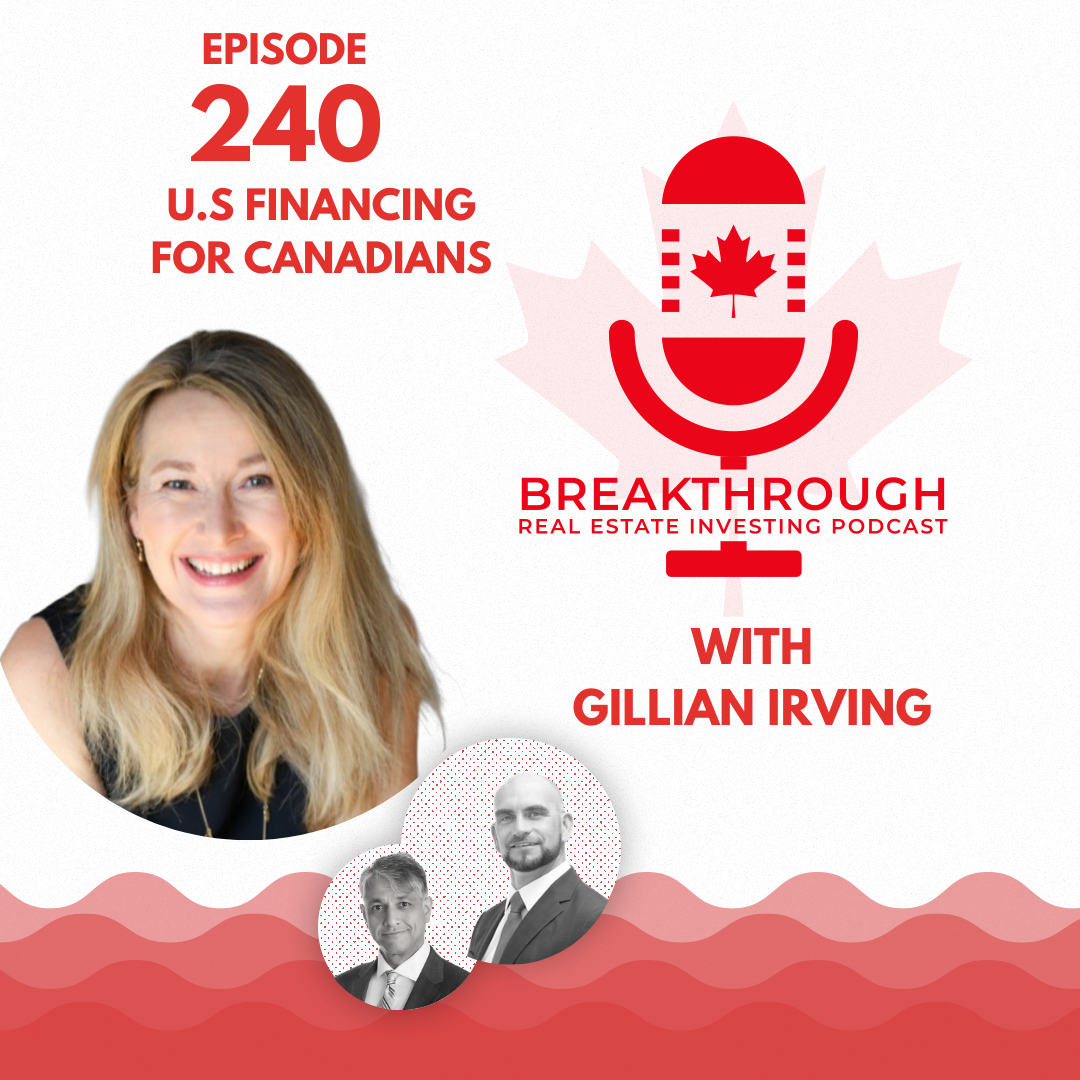
[00:04:26] Speaker D: So Jillian Irving describes herself as an accidental investor, a label that traces back to 2009 purchase of a downtown Toronto duplex made with little planning. After realizing that her early success was driven more than by luck than strategy, she. She committed to more disciplined, data driven approach motiv. Motivated by the need to build long term security for her family. With a background in market research, she built a sizable real estate portfolio across five Ontario markets, markets and New Brunswick. Today, as a mortgage agent with Len City, she combines investor and lending experience to help Canadian clients structure investor focused financing including supporting those exploring cross border opportunities in the United States and Mexico.
And that's. And I'm actually kind of interested in the Mexico thing.
[00:05:23] Speaker B: Not like, yeah, well, it's a little bit more complicated.
[00:05:26] Speaker D: Yeah, that's.
[00:05:27] Speaker C: I've.
[00:05:28] Speaker D: Because when I was in Playa del Carmen for the month of January, I was like, yeah, I cannot help like it's, it's like an addiction. I cannot help but go look at stuff.
[00:05:39] Speaker C: Right.
[00:05:39] Speaker D: And so I was. I was there looking at. And I was like, none of these things. Pencil, really. Well, you have to, like, your financing kind of. Yeah, kind of sucks. Like. And every time I talk to somebody about financing, they're like, yeah, just buy a cash, pretty much.
[00:05:57] Speaker B: I mean, it's hard. We can do it. But. Well, it's the least sexy of all of the things we're talking about today, so let's finish it with it.
Ouch.
[00:06:05] Speaker C: Oh.
[00:06:06] Speaker D: Oh, gosh.
[00:06:07] Speaker B: I mean, we can do it, but it's not. It's like, it's not. It's less glamorous than the other ones, I would say.
[00:06:13] Speaker C: Yeah, I think. I think it, you know, this particular point in time, too, people are maybe reconsidering that option a little bit more as well.
So, you know, whatever, we can. We can touch on it, but that's all good.
Jillian, you want to tell us a bit about yourself? You were just telling us that you're going to try to hit.
You're a marathon runner.
[00:06:34] Speaker B: I'm a marathon runner. Yeah.
[00:06:36] Speaker C: So I have.
[00:06:37] Speaker D: I have a text message from Jillian, like, way back when, saying, I don't know if I can even do a 10k.
Just so you know, I'll go back and I'll find it. We'll put it in the show notes.
[00:06:48] Speaker B: No, I started running during COVID I mean, it's not a huge psychological leap. Like, I had to run away from my house. There was so many of us living there. All my kids were losing their minds. It was tough, right? So I just used that as an opportunity to do something productive.
And I. I started running and I just stayed super consistent. And I. Yeah, I. I just. I just. I just started and I never stopped. And consistency was my friend, as it is for anything. And look, I can make it super corny and bring back all of these strong parallels between real estate investing and marathon running, because there are a lot of them.
And, yeah, within a year, I was running races. I ran my first marathon. You know, a couple years later, I. I kept running. I qualified for the Boston Marathon. It was crazy.
Yeah. And so now I'm trying to, like, pick off all the world majors the next couple of years. So that's what I'm working towards. So at the moment, I'm just training for Berlin. It's in the fall, so I'm just coming off a sprained ankle, so I've got lots of time to get my base back up there and hopefully Kick some butt in Berlin this fall.
[00:08:07] Speaker C: That's cool. And so can anyone just go do it or. You said something about the Boston one. You had to qualify.
[00:08:14] Speaker B: So for Boston you have to qualify. So they've got really strict time constraints. So you have to beat, you have to get a certain time in a qualifying marathon in order to be accepted into Boston. And you know, I guess that's one of the benefits of starting running later in life. You know, as you get older, the, the speed in which you need to run a marathon is more generous for us older folks. So I guess I used, you know, a lot of, a lot of running a lot of marathons and a little bit of my advanced age to help me with that one.
But yeah, so I got into Boston with my time in new. With my time.
But for Berlin, it's like most of them are lotteries, but they're hard because running is such a popular sport now. So I often like, so for Berlin and London, I'll do that through a travel company. And so you pay a little bit more, but at least you're guaranteed a spot, so.
[00:09:07] Speaker C: Oh, that's good. Yeah, yeah, you wouldn't want to go and not get a spot.
[00:09:10] Speaker B: Yeah, no, exactly. You know, you definitely, definitely need to make sure you've got your spot first and then train to make sure you can run it successfully.
[00:09:18] Speaker D: Yeah. Just so everybody knows who, who's not on the YouTube channel.
Jillian looks like she's 30 by the way. So like, she says that she's, she's old, but you could never tell that by looking at her. So like, give me a break there. Whatever.
So, so like on the real estate side, why do you think so many Canadians are, are looking south and looking at other places to, to invest in real estate? You know, Mexico, that sort of thing.
[00:09:48] Speaker B: Yeah, but anywhere really.
Well, I mean, so anyone who's been paying any attention to Canadian real estate in the last little while has like, if you started investing 10 years ago, we're the, we're the, the beneficiaries of this like, really incredible increase in prices. Right. And so that's great if you started investing 10 years ago or eight years ago or six years ago.
But prices are now incredibly expensive in Ontario and they are in BC as well. So many people who are like, I love, I like, I understand real estate, I understand how the, the magic of, of leverage works and how it can advance your returns. They're like, but I just can't afford a seven hundred thousand dollar house in Canada like anywhere. I just don't have enough for the down payment for a house at that is that expensive. So I think price is one reason why people are looking south. They're like, I need a property that starts with the number one, like $100,000 home or a $200,000 home. And those are abundant in the States. Right. So one, just a lower cost entry and then again, depending on what province you're investing in. In Canada, there's many of us landlords who have felt the effects of jurisdictional biases towards tenants. Right. So in Ontario, you get a tenant, they don't pay and it takes you whatever, however long to get a tenant out. So people are like, I've had enough of that. I can't, I can't run a business or run a business safely where I can't control the number one input, which is my revenue. So they're like, I want to go somewhere where that is more controllable. So I mean, obviously there's some provinces in Canada they're a little bit better, but in the States, you know, there's more opportunities there as well there where you can go to different states that, you know, if they don't, if your tenants don't pay, you can evict them within 14 days. Right. So they're like, if you're a business owner, if you're going to choose between where you want to start, one where it's super expensive and hard to guarantee your income, like maybe Ontario is not the place. So often, you know, investors are looking to another market where they can control those things. And the states for a lot of people.
[00:12:02] Speaker D: Yeah, I, I, and I see the like, particularly the last risk that you talked about for somebody who's just buying like one property or two properties and it's a duplex or it's a couple single family homes because the, nobody really cares in the government and the tenant groups don't care. But if you don't have income coming in to pay your mortgage every month, you're gonna go broke because of the bureaucracy of the system.
And it's not based on like, I know from my experience in, in Florida I can get somebody out in less than a month.
[00:12:40] Speaker B: Yeah.
[00:12:40] Speaker D: And, yeah, and it's a much bigger population base than we have in Ontario. And, and it's not, and it's not that hard to do. And it's all based on the, you know, that system. So it discourages individual landlords and it prefers, you know, corporate landlords who can sustain a longer loss. And, and, and honestly for people, for people like me who've been in the system a long time and have like, you know, lots of equity, 580 units and lots of equity. I can, you know, I'm fine but
[00:13:21] Speaker B: well, this is it. So you can weather the storm of one or two or 10 or 20 people not paying. Like that's not going to bring down your, your, your portfolio. But if it's these small landlords. Right, and that's again why I always liked being a student renter, like a student landlord to, to.
Because you could divide the risk up at least between five students or six students. But yeah, so it's that like rental security which is, is lacking these days here. So people are like well what are, what are the options for me?
And there's, they're, they're harder here and they're getting harder I would say so
[00:13:57] Speaker D: certainly from like they're always. Financing is more, more challenging for, for those investors, the people. I was just saying this last night at Durham rei, there are the people who bought the most homes are the experienced landlords who could buy, you know, 5, 10, 15 properties who bought it for cash flow, managed it very well.
They can't get financing as easily as they could before. And those are the people that were buying. And yeah, because of the financialization of, you know, I think that this, this is kind of coming to roost from five years, 10 years ago, previous governments and, and all the language is now coming to roost and also the result of that is happening in the real estate market.
From my opinion, that's partly, you know, like if you can't finance properties, you can't buy them, you can't, you have less competition, prices have come down, the cash flow is there but the, they can't get financed. You'll find like what I'm seeing now is a lot of the people who are buying are first time home buyers, which is what we probably wanted in the first place. Yeah, right. And so that's, that's interesting that you say so is this shift, you know, we're looking at pricing cash flow, financing friction in Canada and there isn't the same thing in the U.S. is that what it is?
[00:15:28] Speaker B: It's not, it's not that they're, I mean obviously depending on, on lots of things there can be those there, but I would say that there's less of it. Right. So financing friction is a huge thing here. Like you were saying, it's harder for people to qualify. The qualification rules are totally different and we way easier which surprises people. For investors looking to buy in the states?
Yeah. And again, pricing, look, I mean you can buy houses in any range down there, but you can find places that cost $100,000 in Cleveland, I mean, and probably cheaper and still rent them out for, you know, 1500 bucks a month. The cash flow is like, there's options there for, for much cheaper properties which Ontario investors just don't have access.
[00:16:15] Speaker C: And there's so many markets and there's so many markets and so many more cities and so many more opportunities. And so if you, you know, there's, there's the big ones that people generally like. I mean everyone loves Arizona as a, as a. But, but you know, once you get into Phoenix, then you're up, like the prices are up and you get like places in, in New York and places in California where the prices, you know, don't make sense necessarily. But there's so many other markets to choose from. Right. Unlike unlike sort of Ontario.
It's, it's a lot harder to find, I think good deals and, and you know, markets that work still.
[00:17:00] Speaker D: Yeah, I think that there's a lot of cash flow in Ontario and there's investors who want to buy, they just can't qualify. Yeah, like, like I, like if I have a property that I'm selling, I, I've seen duplexes in oshawa selling for 650 legal duplexes. That cash flow is probably about four or five hundred dollars a month. Even after property management and everything, the investors can't qualify, they can't get a mortgage. All the professional investors I know and can't qualify for them. So what's the point? Like it's, it, it's so it, it is for first time home buyers. That's, that's how they've geared the market with the offsea and all this stuff. I mean, I, I'm not saying it's right or wrong. It, that's, that's what, it's what the government wanted and I think that's what's reflect being reflected now.
But in the US like as a Canadian going down there, I've had, I have had lots of challenges with financing in the past.
[00:18:05] Speaker C: Right.
[00:18:06] Speaker D: I, I was ghost. I, I spent like six months trying to find financing and I got ghosted when we were just about to close like by my lender, which was crazy. I, I ended up, you know, going all over the place. So what's the, so I, I feel like you have something that's kind of different than, than what I've experienced in, you know, as a Canadian going down, you know, so can maybe you can explain some of the, the loan types that you're able to get for, for long term rentals.
[00:18:39] Speaker B: Right. So I would say so it's such a completely different way of looking at financing compared to Canada. So in Canada is investors.
What we're all thinking about in the back of our minds always is what are my ratios? Like what is my job income or whatever my income, how does that relate to my expenses? They're going to look, they're going to turn under every single rock of all the income sources I have and if my ratios are offside, I'm not going to qualify. So they're always looking at you, the borrower and assessing you. And it's hard as a single person sometimes like especially if you have multiple properties just to get your, your ratios to sync up in the states and the kind of loans that we're doing, they're more like commercial loans where they're not evaluating you or your income. They're actually just looking at the strength of the property. So when like, so when someone buys a property for me, they all, all I need to do to run a deal is what's the price, what are the property taxes, what is the insurance and what is the income? And HOA fees if there's like if it's a condo. But really those are the, the only really things we look at in terms of the property and whether or not that number is above one and if that number is above one, meaning technically it's, I mean we all know that there's things that can happen. So you don't cash flow. But really that's what they're looking for. They're looking for a strong property. And that's what lenders are underwriting is the strength of the property, not you as a borrower. So you don't need to show them any income documents. They don't care about your income. Like you can't show them U. S income anyway because you don't live there and you don't have any credit because you're a Canadian. So no income, no credit and they just look at the property. So as long as the projected market rents are above your expenses, then your deal is good to go.
[00:20:28] Speaker D: And is it a dcr?
[00:20:29] Speaker B: Like what is the, it's like a dcs.
[00:20:32] Speaker C: How do they, how do they, like how do they, you know, qualify your projected market rents?
[00:20:37] Speaker B: They do, they just do a market rent analysis just like you would do here if you got a property appraised and they did a market Rent analysis. If you have leases in place, they'll take those.
But if you're buying a new place and you want to long term rent it, they'll just do a market rent analysis. So it's super easy. And then they don't care. Like here for example, like as a, as someone who looks at a lot of mortgage loans, like we're always super careful, you know, when we have someone who knows wants to buy lots of properties that we put them down the right avenue with the right lender first. We're like, okay, we know we're going to go to this a lender because they do five properties and after that we know we've got another lender who doesn't care about the number of property. Like it's all about structure there. They don't care. If you have 10, 15, 20, it doesn't matter. Right. Each property is evaluated separately and independently and they're like you have 10, that's great. Like that wouldn't be a hindrance to your next one at all because they're not really looking at you, they're looking at it.
[00:21:30] Speaker C: Okay. And then lay out how some of the terms look for the mortgages.
[00:21:36] Speaker B: Okay. So as you know, interest rates here and everywhere are, you are established based on risk. I mean obviously we've got like bond yields and all of that that start. But like so for example, as you graduate up the risk curve rates, rates go up. So if you're in an A lender the rates are lower. B lenders where your, your ratios are bit off, rates go higher, privates are higher. So in the states when we're doing these DSCR loans because they're not, they have no security in you as a person, they're just looking to property. Like that's riskier. Right. For them as a lender. So in general rates are higher for these DSCR loans than they would be if you were an American just getting a long term rate. So you just have to expect your, your starting point for your rates to be a little bit higher.
And then you know, you can get a 30 year term like you can here. And then you have like they call them prepay periods. It's like a, you can have a five year prepay where it's like here if you have a fixed rate for five years, you pay a penalty if you break it early. And there's kind of ways, different ways to kind of adjust for that. But yeah, the year and terms can vary between 1 and 5 and then your amortization can be 25 or 30.
[00:22:51] Speaker D: So.
[00:22:51] Speaker B: And you can do interest only too. Like there's options for that.
[00:22:54] Speaker C: Did you say loan to value? Sorry, I did. I missed that.
[00:22:59] Speaker B: No. So, so for, for, for Canadians. So for foreign nationals investing there, they're, they're going to want a little bit more down. So we usually say to budget between 25 and 30% down. So again, it might be a higher down payment, but if you're buying a much cheaper property, it's still like less capital intensive compared to this year. Yeah.
[00:23:23] Speaker D: And did you say that there was a 30 year term or is it 30 year am?
[00:23:28] Speaker B: A 30 year am.
[00:23:29] Speaker D: A 30 year am but you.
[00:23:32] Speaker C: 30 year term, 60 year am quinted.
[00:23:34] Speaker D: No, no, no. Like my mortgage in the US is a 30 year term.
[00:23:38] Speaker C: And what's the amortization?
[00:23:40] Speaker D: It's 30 years. It started at 30 years.
So, but the problem is that like, so I have my, my four properties that are renewing next year. After five years it flips to like, like what you would call like a, a variable rate where it's prime plus one, prime plus two. I can't remember.
And so, and at that point I can refinance, but I have a 30 year term. Like they're, they're not going to get rid of me, which is kind of like a benefit of.
[00:24:12] Speaker C: Yeah, yeah, I see what you're saying. You know, it's not a five year term and then a, and then a renewal. You could fi. Refinance after five years, but the term is 30 years.
[00:24:21] Speaker D: Yeah, yeah. Which is like.
[00:24:23] Speaker C: No, I've heard that, like, that's a very interesting point too. Right?
[00:24:27] Speaker D: Yeah. Quite a bit different.
So if I look.
What is the US prime right now?
Jillian, do you know?
[00:24:36] Speaker B: Oh, that's a good question. I'm not, I'm not, I'm not sure. We usually do what, we usually do fixed rate loans there.
[00:24:44] Speaker D: What do the numbers start with?
[00:24:49] Speaker B: I would say for most of the, most of the deals we're seeing, it's either high six or low seven.
[00:24:54] Speaker D: Oh, wow. That's pretty good.
[00:24:56] Speaker B: Yeah.
[00:24:58] Speaker D: Okay, and so like, what can you give us like an example of like some of the strategies that you've been able to finance in the US So long term rental is pretty simple, straightforward. But, but people, people who, who buy stuff in the US they're usually a little bit more creative. So they want to do like a Airbnb or Burr or they, they're flipping or whatever.
[00:25:24] Speaker B: Right. So, so that's like, it's no problem. We have Airbnb lenders who will Use that as well too. Like, it's much easier that way. Again, we have a of lot, lot of investors who are coming to us who want to do flips. That is actually, you know, a pretty interesting strategy because we have lenders who will lend at 65% loan to cost. So imagine like, let's just make up some numbers you purchased. Like there's a property for sale for $90,000. You're going to put in $50,000 and it appraises a $200,000. Well, 60, 65% of that is $130,000. So you've got that. They'll take the $50,000 rental loan and they'll give that to you in draws. So you don't need to have that at all. They'll pay, they'll pay for your renovations.
And then so you're left with $80,000. And on a $90,000 purchase, that means you need to bring $10,000 to the table, which is pretty good, like from a capital allocation perspective.
Now for all of those people out there who are going like, wow, I bet I can like raise the ARV even higher and I wouldn't have to bring any money to the table. I can make it work. They won't do that anymore. No one will do a zero money down loan. It doesn't matter how great your numbers are because you know, they've been there, done that. Like, that's not their first, you know, it's not their first rodeo with zero money deals in the States. So everyone's been schooled on never doing that. So you'd have to put, put in something even if your numbers look like you wouldn't need anything. You have to bring some money to the table. But the point is, is that you can do flips in the States with not a ton of capital, right?
[00:27:07] Speaker C: Very, very little capital.
[00:27:09] Speaker B: Yeah, with very little capital. And so compared to what you're going to ARV for, right, like what you're going to sell it for when you're done. So for a lot of investors, that's super appealing.
But I will say this, like the, the refinance component. So in Canada, we're all used to this 85, 8 or 80 refinance, sometimes 75 there, it's lower, it's 65. So you really have to know your numbers. You have to understand like the full, you have to understand the full process before you do it. Because everyone's like, for a bir.
For a bir. Yeah.
[00:27:42] Speaker D: Right, okay.
[00:27:44] Speaker B: Yeah. But I mean, if you can get your if you can get your act together and do, you know, sort of one flip after the other, you don't need a ton of. And that's what's super different from here in Canada. You know, like, we've got lots of flip lenders who will, but you need to, you need to show them evidence that you have that money to do the renovations yourself. They're not going to give it to you. Whereas we have lenders who will, who will give it to you in draws. I mean, you might have to, you might have to pay it up front and they pay you back, but at least you're not holding up your capital at all.
[00:28:15] Speaker D: And with the BUR component, there's something different in the US And Canada is that they have a seasoning.
Can you explain that? Because not everybody will understand.
[00:28:26] Speaker B: Well, seasoning is just simply. It's kind of like they just want to make sure that you can't sort of recycle super quickly. So if you finish something, you have to wait a little bit.
[00:28:41] Speaker D: And is there a specific time, like, or does it depend on the lender?
[00:28:46] Speaker B: It depends on the lender. I'd say there's usually a minimum of 60 days. Some might be a little bit longer, some might be shorter.
And again, this is the, this is the tricky part about the lenders in this in the States and trying to, you know, wrap your head around what is possible.
Because here in Canada, like, as investors, we get pretty used to a handful of people we would turn to. Once we've exhausted the A lenders that we all know, we move on to a handful of B lenders and you know who those are.
But in the States, literally there's a lender at every corner. And so everyone does things slightly differently. And so if you switch lenders, they might have, you know, a little bit of a different product from the other DSCR lender as well. So nothing is written in stone until you have your lender picked.
And, and then the details might kind of shift around a little bit. Like, so, for example, seasoning.
[00:29:42] Speaker C: The purpose for that, though, is just to, like, is just to get the couple of payments to make, ensure a couple of payments. Is that. That's really all it is?
[00:29:53] Speaker B: Yep.
[00:29:53] Speaker C: Yeah.
Okay.
[00:30:00] Speaker B: So I would say what we, what we see.
So people were like, in selecting a lender there, I mean, we have to weigh all these different criteria in selecting a lender for our, our investors. So some, for example, don't want to have to travel to the US to close the loan. So some lenders have something called Ron Closing, remote online closing. Some do not where I mean you literally have to hop on, you must hop over the border to sign your final documents. They'll send you a notary, like they'll send you a mobile notary, you just meet at a Starbucks or whatever. But not some people. Some lenders will do that, some will not do that. So if you can't travel to the US like that needs to be established up front. If you know, if you want super, super, super fast closing, like a 14 day closing, that's like a different avenue as well. If you want to close in a LP versus an llc, that's all that can also be different. Some lenders don't like that, other people are fine with that. So like the structure, use the layering of your structure, all of that. These are all things that we need to bring to the table. But, and that makes it sound complicated but it's not terribly, it just means that the lender we pick for you, like we need to do that homework. But it's easy, it's easy to find someone and there's so many.
[00:31:27] Speaker C: So you mentioned different corporations and also like yeah, let's just talk about that. Is that like what are the requirements? Can you close in a personal name? Do you need to have a corporation
[00:31:37] Speaker B: you can close in your personal name? We don't recommend it and there's way more lenders who will lend in a corporate structure.
So I would say the, and this is probably the biggest point of friction for Canadian investors who want to go down the states and that is that you kind of do need a legal entity set up in advance.
And you know we have, we have tons of people who recommend like cross border tax people who can assist you in setting up a, a structure that makes sense for you. And so really it's best to have that in place before you go shopping. Right. Because we can get you preferential rates if you're closing in a corp. And plus it gives you, you know, protections from a, from liability and double taxation and all of that. So we do recommend that everyone has a corporate structure set up and that's money out of your pocket. So some people aren't prepared to get that set up before they go shopping. They want to do it the other way where they want to shop first and then they're not ready, then they're not whatever the buying time.
[00:32:44] Speaker C: They're not, they're not mind blowing. It's probably like fifteen hundred dollars or something like that.
[00:32:48] Speaker B: No, it's not expensive.
[00:32:50] Speaker D: Yeah, it depends on who you're asking for advice.
[00:32:53] Speaker B: Yeah, I suppose that's true. Right. There's always more expensive advice.
[00:32:56] Speaker C: Quentin. For.
[00:32:58] Speaker D: I spent. I spent probably about $25,000 talking to different lawyers and accountants trying to get the right structure.
[00:33:06] Speaker B: Right.
[00:33:06] Speaker D: The actual cost of the structure didn't cost me that much.
But you know, I, I also.
[00:33:13] Speaker C: But you're talking about, you know, you're going in there with the, your big plan and having everything set up. Umbrella corporation.
[00:33:20] Speaker D: No, no, no.
[00:33:21] Speaker C: It was, it was.
[00:33:22] Speaker D: I was going guns ablazing like, you know, multifamily LP str, like. So I ended up with an LP structure and I.
[00:33:33] Speaker C: The.
[00:33:33] Speaker D: Some of the challenges was the type of lenders that I could work with don't all like having an LP structure. So like. But at the time, it just made the most sense to be able to do for liability protection, but also like structure so that I didn't get double taxed, which was really important to me.
[00:33:53] Speaker C: Right. Yeah, but all you had to do is talk to Jillian.
[00:33:57] Speaker D: No, it's not that easy. She could.
You have to also know my, my background and like my. All my net worth and like a whole bunch of stuff that I like. Although I appreciate her as a friend. I'm not gonna all my, my stuff
[00:34:11] Speaker C: unless you can tell us that stuff here right now. We can.
[00:34:14] Speaker D: Oh yeah. How about you tell me what's in your bank account, my friend?
[00:34:19] Speaker C: Ah, let's see. What. What are we going to talk about?
[00:34:21] Speaker D: They're gonna change the question. All right.
So what's the closing process like for? Especially compared to like the Canadian closing process?
[00:34:32] Speaker B: Yeah, like it's pretty simple. I mean, it's pretty comparable. I mean there they have title companies instead of lawyers. They take care of all the behind the scenes stuff. You pay them directly and they can. We can close pretty quickly. No, but no one having said that, no one really likes a super fast closing because everyone's really tense, you know, like. And if you get an appraiser, that takes longer. But yeah, like we can close in 30 days if you need, like less than 30 days if you have to.
And it's more just about getting a title company and that's it. Like, it's really not. It's not super hard.
[00:35:05] Speaker C: So what, what would be the, the reason to have such quick closing?
Like, why are people wanting that?
[00:35:15] Speaker B: I.
I don't know. I mean, I guess if you're a flipper, I mean, time is the essence, right? If you're a flipper, you just have your project, you want to like the Velocity of money matters to you. If you're trying to do deals, a lot of deals, you just want to get in, get out.
[00:35:30] Speaker C: I was kind of wondering why. Maybe it was more of a like, hey, give us a good deal and we'll close quick.
[00:35:36] Speaker B: But look, I suppose it could be a negotiation tool too, right? If you can tell your, your seller that you can close in three, three weeks, that you might be able to negotiate, you know, slight discount, that makes them happy to just close quickly. But I, I would say just from a, A, you know, mental health perspective,
[00:35:56] Speaker C: like 45 days is, yeah.
[00:35:58] Speaker B: Just regular is good. I mean, we can, we can do it in a pinch, but you know.
[00:36:01] Speaker C: Yeah, yeah, yeah. If you're, I mean, 45 days is,
[00:36:05] Speaker D: if you're pretty quick closing, you can close really quick. Right. But if you're trying to get financing, financing together, it, it just doesn't make a lot of sense. You're just going to create a lot of chaos for everybody unless you, unless there's some super really good deal and it makes, you know, the seller really happy. I, I don't know if I would create that type of chaos. Right. But it comes with experience when you're, when you're doing it. I just found that there's like, every brokerage has their own title company. And it was a little weirded out when I was going down there. I'm like, I'm not even dealing with a lawyer. Like, who is this person?
[00:36:43] Speaker B: Like, yeah, who is this random title company? Yeah.
[00:36:45] Speaker D: You know, and, and they, because everybody can own, like a lot of people own title companies who have brokerages. So you're not even having it reviewed by anybody external. Although it says that it's external. You're really dealing with a title company and the realtor. And you're like, did we actually buy something? Like, did it actually go through? Because you, Because I guess I'm so used to dealing with lawyers with all the transactions we do. It was my, it was kind of shocking experience.
[00:37:18] Speaker C: So what kind of, what kind of onus is on the title company for their due diligence?
[00:37:24] Speaker D: Well, that's the thing too. Like you. I, I had an experience where when I had done my first, like I had gone from one lender to another and then gone through a title company to, to, to, to get into the next lender. And they had said that there was some other problem that the first title company didn't figure out or whatever. I was like, well, I don't know. Like, I just dealt with this person. So I Tried to connect the two title companies together out. It got figured out. But I was just like, what the. This is the weirdest.
It's like Jane talked to John and figure it out and we'll get it done. But I guess you do the same thing any, anywhere. Like, the only difference is they have a, like a law degree and they're. But they're doing the same thing. And, and like, if you had a problem with title before in your doing two transactions, you'd probably end up doing the same thing.
[00:38:21] Speaker C: What sort of closing fees are there?
Like what, what can people expect to pay for closing fees?
[00:38:27] Speaker B: Right. So, so there's, there's, well, the fees in general. So like in Canada, there's an appraisal fee that is inescapable. Everyone needs to do that. There's lender fees, so there's a fee that we collect and depending on the size of the loan that could be anywhere between 1 and 3%.
So obviously like these super small loans have slightly higher fees. The bigger ones have lower fees.
Some of the like, again, the lenders have their own fees that we don't always know in advance exactly what they're going to be. Most have an underwriting fee of some sort that.
Yeah. So they have an underwriting fee and then there's the title fee. So like, like your lawyer fees here, depending on the title company that you use, it can, it can range, right, from whatever, 1500 bucks to 2,500 bucks. It depends.
[00:39:24] Speaker C: So is there, is there like a rough percentage based on the cost of the property that you could use to. Roughly, kind of.
Really?
[00:39:35] Speaker B: No, not that I, not that I know of.
[00:39:38] Speaker D: Because it's independent companies, they set their own. Yeah, they set their own standards. So like you could be in the same house and deal with two different title companies and two different lenders and have totally different experience.
[00:39:53] Speaker B: Yeah.
[00:39:54] Speaker D: Right. So it's, it's quite, it's quite. I, I love, I love the chaos of it because it's like capitalism extreme. But like, at least you know, you're getting stuff done and you know, I, it's, it's, it's quite, yeah. Quite an interesting experience as a Canadian down there. And you know, I was buying back in 2018 and 19. Like the properties I were buying was like 80,000 and like 130,000, 140,000 for a duplex. And now they're worth like 240 and.
[00:40:25] Speaker B: Right.
[00:40:25] Speaker D: And 4, 40350 or like so they've done well and they cash flow well. So now I Have to come back to Jillian and say, hey, I got, I got a lot of.
[00:40:35] Speaker B: I need to refinance these next year.
[00:40:38] Speaker D: It's coming up.
So.
[00:40:40] Speaker B: Yeah, so I mean, the States, it's like a, as you say, it's sort of like this big, beautiful, chaotic place where everything, there's more of everything.
And I would say that's the good part and the bad part. I see for my investors. So I, I talk to people all the time who are, who really want to invest, but they're incapable of moving forward and they can't because they have analysis paralysis. They're not just deciding between Ottawa and Peterborough. It's like they're deciding between, you know, gazillion options and they cannot put their stake in the ground because they cannot decide where to go.
And so this is where I tell people who are interested, spend some time figuring out what your market is. Use the skills you have as a Canadian investor to narrow down your market. And then once you have one or two markets or whatever, you narrow it down, don't look anywhere else. Stop.
Because it's like that shiny penny syndrome, but on steroids, where your market has all the things that you look for, all the criteria that check your boxes.
[00:41:57] Speaker C: But so what about this one over here? It might too. Yeah, yeah, I see what you're saying. I think that that's very good advice
[00:42:05] Speaker B: because, you know, and then again, like, so you know, Quinton, I remember, I mean, in your, in your meetings, I hear you guys talking all the time too, about, you know, you stay focused on your strategy as well. So if you're going to start flipping in Cleveland, then just do that for a while. Master that before you then go to long term renting in Kansas City. Just focus, focus, master what you're doing. And then once you've got some momentum, then, then look elsewhere because otherwise the, the, the difficulty in starting will over overtake you or, or to get really good at your craft is hard. It's hard to do because there's just so much dist.
Just focus in first.
[00:42:51] Speaker C: Well, I think the best advice that you gave right there was just if you find something that meets your criteria, then go ahead and pull the trigger.
[00:42:57] Speaker B: Yeah.
[00:42:58] Speaker C: Yeah, that's cool.
[00:43:00] Speaker D: And you must see some pretty cool insights, like, where are Canadians buying, like in the US Right now? Like, what's the, where are they flocking to? Because that used to be Arizona and it used to be Florida.
And I don't know if that's changed or the same or is there like something else that that's really drawing a lot of like the majority of your clients, let's say.
[00:43:25] Speaker B: Well, so I, I will say that I have a ton of people who are interested in the really like the entry level, the really inexpensive property flips that you can do in like Cleveland or Detroit. Like people who want to do flips, that's where they're going, going one I think because it's, it's near. I mean first of all it's not difficult to get to you. Just it's not far away and the entry price is low. So it's kind of a smart way to refine your craft with not so much risk in terms of money. Like how far south can $110,000 purchase really go? Right. I mean you're right, you're capping your, you're capping your downsides when you're starting with, with, with cheaper properties and your upside as well. But at least you can get better at flipping.
So I've got a lot of that. I still do have a lot of Florida though. I feel that Florida that while there is a lot of people who show interest in Florida, that the amount is, is, is lower than it has been in the past. There's all sorts of like there's insurance stuff that there didn't used to be in Florida where it's harder to get insurance and insurance by magnitudes of whatever a year. And so that's also made it difficult for investors to control their, their costs.
But we've seen, we've seen a lot of like Phoenix, Arizona, there's like Kansas City stuff.
[00:44:58] Speaker D: What's Kansas City like? Like what, what is it long term rentals in Kansas City?
[00:45:03] Speaker B: Or is it like, well, 46 of the residents, 46% of the residents in Kansas City are renters. Like it's just a rental market.
[00:45:13] Speaker D: So, so long term rentals are what you're seeing in Kansas City. Yeah, what about the.
[00:45:20] Speaker B: And it's got like, it also has infrastructure stuff that's super important. Like I think that's where it's the home to the largest rail center in the US it's got a billion dollar plus in data centers from Google, Meta. Like there's, I mean if you want to find markets, do that kind of research, right? Like, you know, so Huntsville, Alabama, it's like a tech powerhouse. That's where NASA, Boeing, Meta is. That's also a market where housing is 25 cheaper than the US average. Like those are the kind of metrics that you want to look for when you want to find a Market, like, where's big industry going? What's the rental mark? You know, what's the percentage of renters in that market? And that will help you a lot.
[00:46:07] Speaker D: Yeah, yeah. We've got a upcoming guest, Neil Bawa, that's, that's gonna talk to a lot of that sort of stuff. So that I think that'll be helpful to kind of connecting up. So make sure you keep listening to our podcast here.
[00:46:26] Speaker C: I was just, I lost my train of thought there. Sorry. Oh, I was gonna say.
So if, if people want to learn more about this from you though, what can they do?
[00:46:38] Speaker B: Well, I'm always free to have conversations about this. My, My email is jillianndcity.ca. you can send me an email. We can book a time in my calendar to talk about it anytime.
[00:46:49] Speaker C: Okay, we'll put that in the show notes.
[00:46:52] Speaker D: What's a, what's a good, like, piece of advice that you can give people?
[00:46:58] Speaker B: Yeah, you know, can I use a marathon metaphor or is that too corny?
[00:47:05] Speaker C: No, go ahead. Please do.
[00:47:09] Speaker B: I would. There's a couple. I would say discipline beats motivation every single day of the work. Right? Your motivation trains fades during your training. So you need to follow a plan. Like you need a system to figure out what market you're going to invest in. You need to show up and do the work even when you don't feel like doing the work. Like, that's the discipline part. You need to keep going when it gets hard or news comes out that is going to make your path forward difficult. So discipline, like, what is your, what is your plan? What's your training plan? And then follow that training plan and don't let anyone come, like get you off that path because it's the consistency that makes you the runner that can run the whole marathon or the investor that can actually invest for the long term. And then preparation. So, and that comes back from the discipline that you do. So you doing all that work, doing your research to figure out which markets have the upcoming industry. Where are all the data AI centers going? Like, just do use that as a metric to find your market. Like we all know that's coming. So and if you prepare, that's going to reduce the risk. So like while you want to be an action taker, you also need to be a prepared person so that you can actually cross that finish line or keep going in the, like the, the, you know, the miles at the end that are so hard. Right. That's what's going to do it.
[00:48:44] Speaker D: The last, the last couple of couple kilometers or the last Couple miles for sure. And, and I've got to ask you, because we put it off Mexico. How the hell do you get financing in Mexico?
[00:48:55] Speaker B: Okay, so that's so. So, yeah, so there actually is a lender in Canada who will do lending in Mexico, but it will come back again to your Canadian income. So you need, you need to have Canadian income in order for those deals to work. And they do look the ratios as well. So the ratios are more, are a little bit more extended.
But yeah, it comes back to, it comes back to Canadian income, but we do have a lender who will look at it. So Canadian income
[00:49:22] Speaker D: and what kind of loan to value? Because I've been hearing like 50%.
[00:49:26] Speaker B: Oh, you know what? I think it's, I think it's low. Ish. I want to. And I need to check because the last time I talked to them, they were decreasing it. I want to say 60, but I'm not for sure. I'm not.
[00:49:40] Speaker D: Okay, all right, that's fair. I had to ask because there are, there are a lot. When I was in Playa del Carmen. Yeah, it was like little Quebec. I was like, what?
Like, it's crazy. The number of Canadians love Mexico. Yeah. And they love Playa del Carmen for sure. So it was, it was quite interesting.
[00:49:59] Speaker C: Yeah.
Well, very good. Thank you, Jillian. That was like super packed with information. I think probably more jammed in than any of the podcasts we've done lately.
A lot of good stuff. I enjoyed it. I enjoyed talking about that.
[00:50:14] Speaker B: Yeah, I love talking to you guys. It's always good.
[00:50:17] Speaker C: So again, what's the best way for people to get in touch with you?
[00:50:21] Speaker B: Best way is by email.
So. Jillianenscity.ca.
yeah, that's probably the best point of contact. And we can get my calendar link out and I'm happy to have any phone calls at any time.
[00:50:32] Speaker C: Perfect. We'll put that in the show notes. And thank you so much again, Quinton.
Pleasure touch with you.
[00:50:38] Speaker D: Yeah, you can go visit quinton d' souza.com book a 15 minute call. Happy to. To chat when I'm, whenever I'm in the country.
And then, yeah, I mean, come out to Durham. Rei. We had a great meeting last night. We have meetings every month and. And I'm starting to have guest hosts do the opening and closing and that sort of thing to give me a little bit more flexibility to travel.
[00:51:00] Speaker C: I like that. Are you still, you're still talking though? A little bit.
[00:51:03] Speaker D: I do a talk in the middle, but I'm trying to do more and more of other people Just hosting the meetings now because I. I've been doing it since 2008. Haven't missed a meeting, but. Wow, now I'm gonna miss a couple, I think.
[00:51:18] Speaker C: All right, well, thank you, Quentin. Go over to DurhamRei CA. Yeah.
And check that out. There's a lot of good stuff on there, a lot of good resources.
[00:51:31] Speaker D: Awesome. Thanks. Thanks, Rob. This has been a great. And I'm gonna see you in Costa Rica next month if we.
[00:51:38] Speaker C: Yeah, that sounds interesting. Quinton. I, I. Well, I can't honestly say I'd go with you, but it does sound like a lot of fun. But I don't even.
[00:51:45] Speaker B: I would do that walk in a heartbeat.
[00:51:47] Speaker C: I even think I would go if, If I, If I could, which I can't.
[00:51:53] Speaker D: 80 kilometers, two weeks commitment. Yeah. Across the whole of Costa Rica, from the Atlantic to the Pacific.
[00:51:59] Speaker B: So what is that, a day? Sorry, I can't do my mental math.
[00:52:02] Speaker D: It's like 20 to 30 kilometers a day.
[00:52:04] Speaker B: Okay. That's so awesome.
[00:52:06] Speaker D: Yeah, it's fun.
[00:52:08] Speaker B: I want, like, a full debrief. I think I want to do that.
[00:52:10] Speaker D: Yeah, absolutely. Happy? Take lots of pictures. And, you know, maybe I can drag Rob, like, maybe the last leg or something, so he can drive me back to Playa for Terra.
[00:52:20] Speaker B: Yeah. How do you get back?
[00:52:22] Speaker D: I don't know.
[00:52:23] Speaker C: I have. I have two cars that are both broken. Token. So we'll see. We'll see what's going on in a month. But the, The. The. The eight ball says it doesn't look good.
[00:52:33] Speaker D: That's okay. I'll. I always figure it out. I'll hitchhike if I have to. We'll see you.
[00:52:38] Speaker C: There you go.
[00:52:39] Speaker D: Yeah.
[00:52:40] Speaker C: And we'll talk later because I talked to a couple of people about it. But if you want to reach me, you want to talk about Costa Rica at all, rob@mrbreakthrough ca thanks, everybody. I'll see you next time.
[00:52:50] Speaker B: Thanks, everyone. Thanks, guys. Really appreciate that. It was a great chat.
[00:52:54] Speaker D: It was fun. Take care. Take care. Bye.
[00:52:56] Speaker C: Bye.