Episode Transcript
[00:00:01] Speaker A: If you're looking for the skills and tools to succeed in real estate investing, you've come to the right place.
This show is about breaking through barriers, breaking through limiting beliefs, and breaking through to the life that you want to live through the power of real estate investing. You're listening to the Breakthrough Real Estate Investing Podcast. And now here are your hosts, Rob Brake and Quinton d'.
[00:00:25] Speaker B: Souza.
[00:00:29] Speaker C: Welcome back, everybody. Thanks for joining us again. Really excited for this one. I have an interesting guest, something a little different, I think, to talk about today.
And of course, as usual, Quentin d' Souza is here with me. Quentin, how are you? Rob?
[00:00:45] Speaker D: I'm doing well. Always doing well.
[00:00:48] Speaker C: Did we catch you in Ontario?
[00:00:50] Speaker B: Are you.
[00:00:50] Speaker D: Yes, I, I leave for Mexico for a month in a couple days, but I am in Ontario just working on getting some refinance is done and a couple more that I've been working hard on for a few months. The conventional lenders are taking a long time, but it looks like we're almost there. Like, I've, I've signed the letter of agreement for three different loans, so we'll get that going. And then I've got a CMHC loan that's coming up the next couple weeks for nine units, so hopefully we'll be able to pull out some capital. And, and my partner and I split that capital as well, so things are good. Just coming up with different ideas. I was at an event downtown and I, I don't know if I told you this before, I was, I was looking to find a parking spot and I actually ended up parking in a residential building parking spot. And I was like, what is going on here? And it was downtown and it was an app called Spot and I don't know, have you heard of that app before?
[00:02:04] Speaker C: No.
[00:02:06] Speaker D: So it was, it was kind of cool. So they are, they put their, the extra parking spots that they have on this app and they're able to rent out the parking spots per hour downtown. And so they have this and I, I looked it up. I was like, oh man, this is a great idea. Like, especially some of our buildings are in the downtown course, so why not utilize some of that parking and, and give it to Spot Hero and see if we can increase the net operating income on those buildings by, by using a, a different income source. Anyways, it was something that I ran into last couple weeks. I'm always thinking about this stuff because I have to. It's my job. Right? So it was, it is really, I'm starting to do some interesting around it. So if any of our listers know about Spot Hero or have any contacts for Spot Hero other than what's on the website, please reach out to me. I'd love to. To chat.
[00:03:13] Speaker C: Oh very cool. So you ended up finding. How easy was it when you used it? This is by the way I like we're not sponsored by these guys.
I am actually just genuinely curious because everyone knows that parking in Toronto absolutely sucks.
[00:03:29] Speaker D: So it absolutely sucks for truck drivers like me. So I drive a 250 like Silverado. It's a big 2005. Sorry it's 2500.
So it's a big truck. It's probably 7ft tall. So I can't park underneath like a parking garage. So I'm looking for spots that are ground parking. So for me it was, it was awesome. I loved it and, and it was really easy. I just downloaded the app like every other parking app that's out there, used it the same way, had the same sort of experience. You know. Parking is going to expire in 10 minutes, please. Anyways, it was great. I love that you know, coming. I love looking at stuff and then from the eyes of my business I, I try to pull it in and see how I may be able to use this for, for ourselves. So it's pretty cool.
[00:04:21] Speaker C: Yeah, yeah. And just real quick you mentioned and you've been mentioning for the last well quite some quite like probably six months anyways that you've been working on. I'm sure it's longer but these refi's and I know you're going to be able to do pretty significant things after these all, after everything goes through.
[00:04:42] Speaker D: Do you have any plans right now what I want to do is I want to maintain my liquidity. So I have, I'm going to take those funds and, and keep them liqu. I would love this year I'm looking to purchase three or four more buildings.
I think we're at the time where it makes the most sense for me to do that.
So I am looking in the Durham region, even Northumberland for some new apartment building. So anybody out there who wants to sell something, feel free to give me a call. This is in, in Ontario, right? So in the Durham region, in Northumberland area. That's where I like to focus because we already, you know like my just my local property management, you know we have a hundred and I think about 130 units all together just around here.
So I, I want to kind of expand on that. So three or four more buildings would be good right now we have you know, 25 apartment buildings across Ontario. So you know, it's, it's just gonna, I just see that scaling and growing. But right now that's my plans for the next 12 months.
Aside from, you know, travel, I want to increase my cash flow in different areas. So last, last year I did four, four months of travel.
This year I'd like to do at least that because so I do these, okay, I'm going off in a little bit here, but I, I do these 20 year goals. So I write down plans and this, this, these plans I did 8 years ago and I do them in different areas of my life. So business and finance, health, all of those areas.
And what was, what's been really interesting is that I've been able to achieve about 80% of my 20 year goals in the last eight years.
And some of those goals were like health related. Remember like eight years ago I was 330 pounds. And you know, one of my goals was to run a marathon and be like at you know, 200 pounds. Well that wasn't going to happen at 330 pounds. But I was able to get there over that time period and do those things. So it's been pretty cool. So this year I've had to redo all my big goals. I set new 10 year goals and I'm planning to, you know, continue to work on that. I work on those every quarter and you know, it's, it's been really cool to, to go back and review all of them and see where I've gotten.
And you know, I think people don't spend enough time planning what they want to do. They, they end up going out and doing it. But I think sometimes I've, I've heard Tony Robbins say this. People plan their vacations more than they plan their life.
And you know, if we, if you can take some time and, and just do some big picture frameworks and planning, I think it's amazing what you're going to be able to achieve. Right? So.
And you know, I don't know, this sounds a little bit of an ego trip, but like my, I was at the gym, some guy called me inspirational. My sister, she said, stop being so inspirational. My wife's cousin's like, you're too inspirational for me. I was like, yeah, this is pretty good. I got three different people, I don't know call me inspirational. That's not a bad thing. But like, I'm just me. Like I'm not special. I just do like I'm, I plan and I, I do stuff anybody can do. It, so it's just about taking the time, right?
[00:08:25] Speaker C: Well, I think one of the things that probably holds a lot of people back from even wanting to set goals like that is because, let's be honest, people in your family and your friends, they don't want you to be doing big goals and big things.
There's a lot of them that don't. And a lot of your, you know, your family is like, no, no, no, don't take risks. Don't do, Don't. Don't try to achieve higher. Like, what's wrong with where we all are? Right?
[00:08:57] Speaker D: Certainly it can be like that. My mom was kind of like that at the time because I was, I wanted to leave my job as a, as a teacher and go into this real estate business full time. This was back in 2012. And for her, I had got my masters and spent all this time doing it. She's like, why are you throwing this all away?
Right? And, but I, you know, I'm pretty strong willed when it comes to doing stuff. And, and so I, I, my life would be totally different now if I didn't make those choices and I didn't push, push past what other people thought was good for, for them, which is not necessarily good for me. Right. So.
[00:09:42] Speaker C: Exactly.
Thank you, Quinton.
[00:09:45] Speaker B: Sorry.
[00:09:48] Speaker D: Yeah. Oh, that's the fourth person now. Okay.
[00:09:51] Speaker C: I want to say that everyone listening should go over to Breakthrough reipodcast, ca, listen to all of our past shows and get in touch with some of the people that we've talked to. If there's anybody in there that's inspired you or, or you just, you know, maybe think that you could add value to them first of all, possibly before, you know, reaching out and asking them what they can do for you. But still, all of the contact information for everyone that we have, everyone that we've interviewed is in the show notes over there, Breakthrough reipodcast, ca, and then leave us a rating and review on itunes. It helps us a lot. Thank you very much to everyone that has.
That's it.
[00:10:26] Speaker D: Awesome.
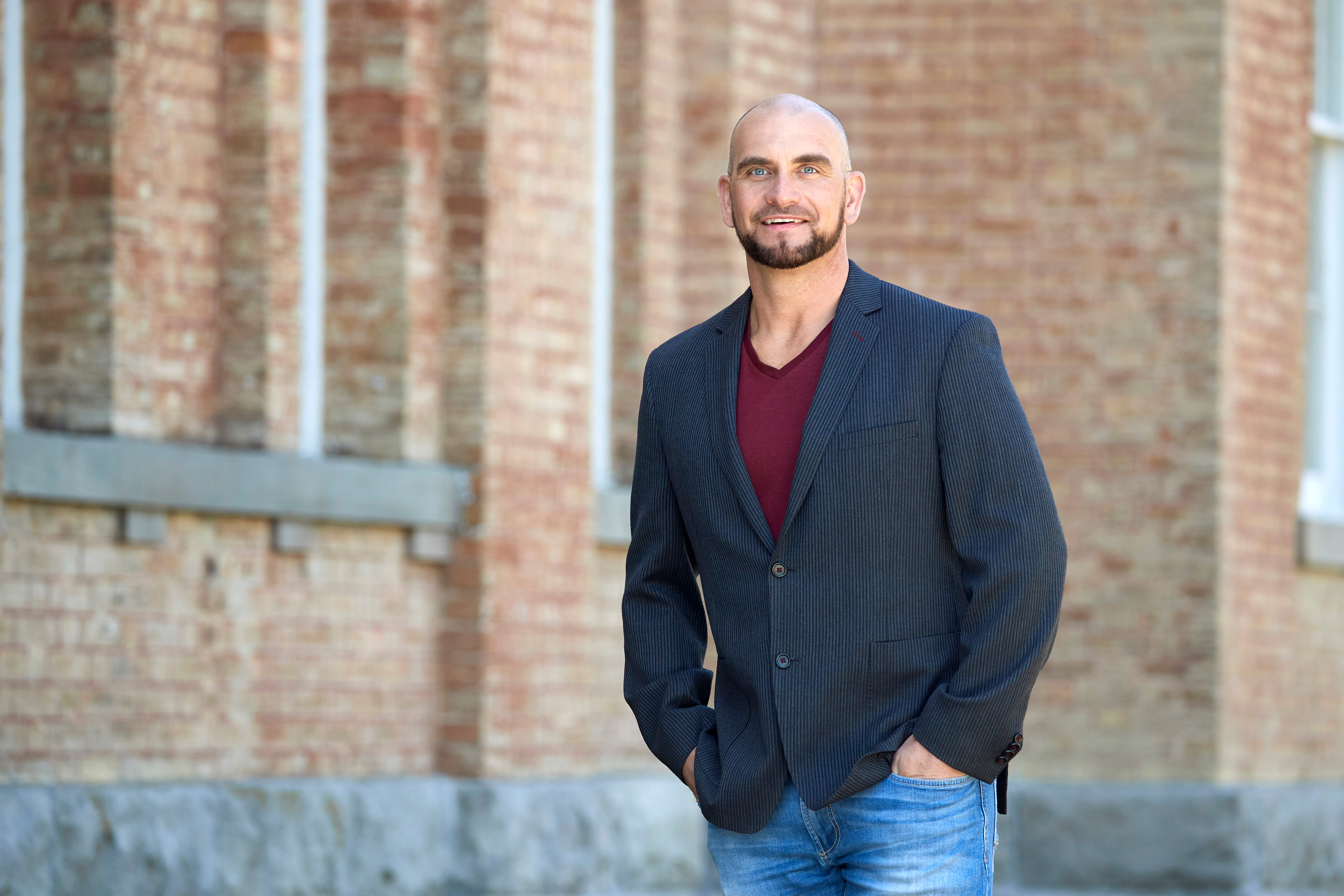
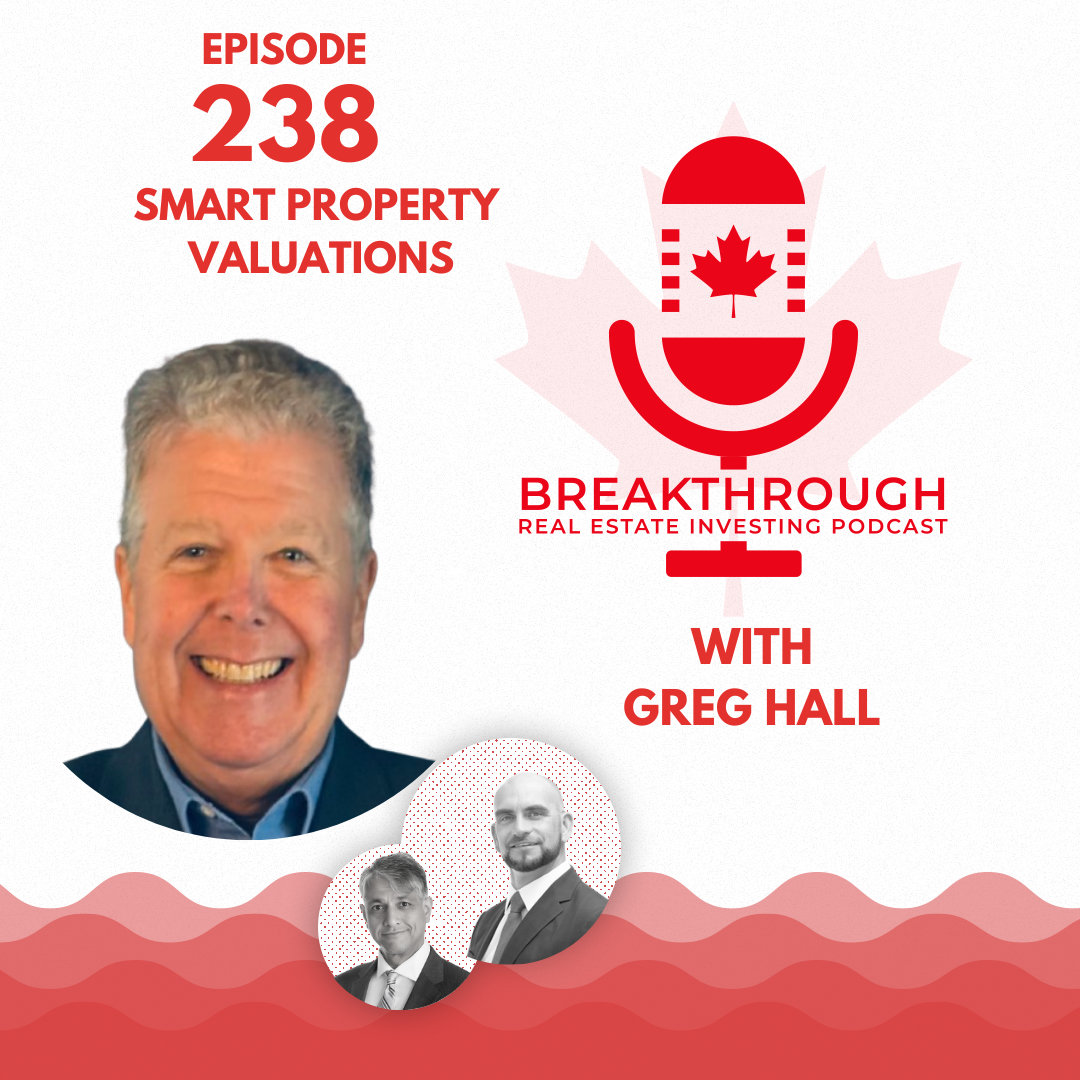
So I want to do a little bit of introduction of, of, of Greg here. So Greg's career in finance and real estate has unfolded over several decades. He's shaped by experience rather than in a straight line. He began in finance in the 80s, moved into entrepreneurship in 85, and purchased his first rental property in the late 80s, only to sell it at a loss during the crash in 1989.
In the early 2000s, he converted a single family home in Toronto Annex into a multi unit and sold it for a profit. In 2009, a severe hip injury led to multiple surgeries.
Years of recovery during that period. He requalified in Finance and joined RBC Dominion securities in 2013, where he remains today. Greg was finally able to re enter real estate in 24 and 25, purchasing a duplex in Oshawa and converting to Brantford single family homes into duplex and triplex. He's in his mid-60s. He's back on track, grounded by hard earned experience and perspective.
[00:11:35] Speaker C: Welcome Greg. Thanks for joining us.
[00:11:38] Speaker B: Thanks guys. Quentin, you really are inspirational.
I love that.
[00:11:44] Speaker D: That's fine.
[00:11:45] Speaker B: And, and, and, and I'm, I'm no flattery. The weight loss journey is amazing. I'd like to find out more about how you did it. But in any, in any case, thanks gentlemen for having me.
[00:11:55] Speaker C: Yeah, happ.
So we just wanted to get started with. I know you've got like all kinds of stuff going on and you've been through a lot. You can share a lot of that. Hopefully we'll have time to get through some of it. I mean there's a lot to get to. We'll see what happens here. But let's just start off by telling us how you got started in real estate. All the way back in early 80s.
[00:12:19] Speaker B: Yeah, it was actually before that. My brother found a book at Loblaws. Remember those little tiny little counter books And I've forgotten the guy's name.
It'll come to me over the course of this chat.
It was inspiring. It was about buying a. Just a, a house, creating a rental unit within the house, renting it. Quentin, to a point you made earlier. Refinancing it and buying more.
And so it goes. This is the theory and this is something that I saw Dolph Deroos back In the early 80s, different other people who were doing seminars on real estate. And I recognized right away.
So just to back up a little bit, I did the strong vocational study in, in high school in the 70s and it said two things. I was. I was slated to become a successful florist or a public speaker.
So the two things that interested me most back in school were theater and economics. Left brain, right brain.
I did go to acting school at Ryerson for a couple of years. But when I went into the real world, the audition process just, I, I hated it.
So my second passion, economics. I, I started to work at Trimark, an old mutual fund company.
And I was there for about.
My parents and brother were in the video business.
My folks wanted to retire. So they said to Mickey and me do you guys want to go into the video business? So, 24, 25 years old, what was I to do? I said yes.
We went into video. I saved as much as I could as quickly as I. Quickly as I could. And I bought my first house and started renting rooms to friends.
Bought another house from that book.
[00:14:21] Speaker C: Like you had been working towards what you read in that book ever since then.
[00:14:26] Speaker B: Yeah, yeah, yeah, yeah.
And so to realize a dream, of course, is really exciting.
The challenge I had back then to cut to the late 80s, was that the video business was being crushed. The independence. We were a store called Videophile and we had two locations, but a jumbo video open opened on one side, a blockbuster opened on the other side. And so I got completely cash flow challenged. And also it didn't help that the real estate market crashed in the late 80s, so cash crunch, not being able to hold on and being forced to sell at a loss.
My financial background, you know, taught me that cash flow is, is absolutely critical.
Quentin, again, you talked about planning earlier in the, in your, your podcast, and I can't agree more. Without planning, you're just fumbling around in the dark. You have, you can't. You can't even plan for the next curve in the road. And we all know that we, we create a goal for ourself, and it's not a straight line to that goal. It's going to zig and zag.
And so my journey in real estate zagged in the early 90s.
Wow.
[00:16:00] Speaker D: I gotta ask you something, though.
Was, was the video file the one like in the Leslie and Finch area?
[00:16:09] Speaker B: Yeah, that was, that was one of our stores, Finch and Victoria Park. The other one was Leslie and Shepherd.
[00:16:18] Speaker D: Leslie and Shepherd. I used to go to the one at Victoria park in Finch. I used to live in North York and my buddies and I would go there and take our videos out for the Friday night and go, you know, that's hilarious. I. I can't believe it.
[00:16:34] Speaker B: That is hilarious.
[00:16:34] Speaker D: I. I remember when it was like taken over, I was like, what's going on here? Like, I like my video file. Like, anyway, sorry, I had to say, like, I remember going to video file.
[00:16:48] Speaker B: We love the business. Do you know, just as an aside, very few people come in, came into a video store back then in a bad mood. You were excited. It was a night out. You're looking for movies. And we had a huge library and it was fun while it lasted.
[00:17:04] Speaker D: Yeah, it was great. I loved it. So sorry, I just, I couldn't believe it. Because when you Said video file. I'm like, wait a minute. I remember, like, go into a video file store. So anyways, that's how old I am too.
[00:17:20] Speaker B: One thing about positivity that I'll never forget is a lady came into the store one day and said, do you have the book Think and Grow Rich?
And I said, this is a video store, ma'.
[00:17:31] Speaker C: Am.
[00:17:33] Speaker B: No, we don't.
But I leaned over and I jotted down the name of that book. And this metaphysical reality came into my world then. Just positive thinking. I was always a positive thinker.
There's no point in being negative. And that's one of my. My absolute critical mantras is surround yourself with positivity and positive people. And to a point that was made earlier, we do get a lot of pushback from people in our lives who aren't aligned with our. Our growth strategy that you have to stretch to reach the. The next shelf.
[00:18:11] Speaker C: That is like, that is really interesting. And that sounds like what you. That story that you just told sounds like something like almost fate saying this. I need to get this book into Greg's hands. How do I do it? Let's just like, I don't know, put the path of this woman to have, like, she forgetful for just a second, walks into a video store asking for a book book. And then you write it down instead of just saying, go away, lady. We don't have books.
Yeah, that's the end of it.
[00:18:44] Speaker B: But the end of. The end of Video file was nigh at the time. It was imminent that we were going to close.
And in 1998, we did close. Rather than being able to sell the store at that point, we simply liquidated and moved on. But, you know, I'm a firm believer as well that a window gets opened when a door gets closed.
And that window was. We had met some people in.
In the encryption software business, and they were looking for a foothold in. In Canada. And through personal contacts, they allowed us to. To represent their product.
And it was a great success. We. We. We made quite a bit of money and I was able to. You mentioned earlier, Quentin, the, The. The proper.
My wife and I had just had our. Our son and I. I saw an ad in a newspaper back in the day when they were around saying there was an open house at this property in the annex. We lived in Moore park at the time we headed downtown. The. The open house was over. But it's this Beautiful big Victorian, 102 Madison Avenue. And I just stood in front of it going, holy, you know what this place Is amazing. It was a single family home, 7,000 squares.
I walk into the backyard and this person charges out on the porch and goes, what the hell are you doing in our backyard? And I. I said, oh, my God, I'm so sorry. We saw the ad for the open house and I. We just came down, My wife and son are in the car and I'm really sorry. I'll wait for the next one. And she said, oh, well, why don't you come in in a British accent. Come in, I'll show you around. So we went in the house, walked in the front door. This is an amazing story, actually, Quentin. You talk about knowing me from video file, and I've got goosebumps. You can't see them. We walk in the house where she shows us around. It is this stunningly beautiful home.
And finally, at the end of the tour, we walk into the living room and I'm looking up at the crown molding. And I said, this place is amazing. It reminds us me of where we live right now.
And she said, where do you live? And I said, moore Park.
She said, where?
And I said, on Glen Rose.
And she said, what number?
And I said, number two.
And she said, upper or lower?
And I said, upper.
And both of us at the Same time said, Mrs. Betts, the landlord from hell, or words to that effect.
She said to me and Heather, I, with my husband and daughter, lived at 2 Glen Rose Upper for nine years.
[00:21:51] Speaker D: Wow.
[00:21:53] Speaker B: We sat down in her living room.
Heather and I bought the house the next day.
We moved in a month and a half later.
We converted the third floor to a two bedroom.
We converted the basement to two one bedrooms and a bachelor. And we lived on the first and second floor in this absolutely stunningly beautiful home in the annex. We lived there for five years.
Our rent, the cash flow was insane. We were bringing in almost $6,000 a month.
So it paid for everything for us.
Mortgage, insurance, phone, cable, everything for us.
And life was never the same.
You've heard my story of rags to riches to rags to sort of comfortable.
And in 2004, we were in a failing electronics business.
But my brother went to China and to pick up some. We needed a new source for some electronic components.
And he found an E bike company in Chengdu, China, and he brought back an e bike.
And we started a company called eped, Way ahead of what you see today in the electronic electric bike business.
And frankly, we did prototypes. It was two years, 2006, when we were ready to go.
Our angel investor kind of screwed us and we got completely sidetracked and lost a ton of money. But that was a should have story.
You look around these days and see electric bikes everywhere.
But that's not Greg and Mickey hall, that's other companies.
And here's the back to rag story.
At around that time, my hip was in absolute agony.
I used to run a lot. I know it doesn't show anymore, but I heard it a couple of times and it was full of arthritis.
So with the E bike business, we were planning on relocating to San Diego and we sold the Madison House at a. We made a lot of money.
But then I had to go into surgery for this hip replacement. The doctor said you can live with the pain or you can fix it. It's not rocket science these days. Get a new hip. Well, I did get a new hip and it got infected and so they had to replace it again and it got infected.
I had to have six surgeries, five hip replacements on the left side, and I was literally bed for a few years convalescing. And that's when the light bulb went on.
I'm going to go back to finance something that I never really got going in.
And while lying in bed or hobbling around the house, I did all of the.
The accreditation again.
And I wanted to work at Dominion securities because it's arguably the. The top wealth management firm in Canada and, and around the world.
And eight interviews later, at 50 years old, the oldest rookie became Greg hall at Dominion securities. And the manager at the Yorkville branch hired me. And I've been here ever since and extremely grateful.
[00:25:25] Speaker D: Very cool.
[00:25:26] Speaker B: That's.
[00:25:26] Speaker D: That's really interesting.
[00:25:28] Speaker C: It is.
[00:25:29] Speaker B: I know I, I threw a lot at you right there, but I want to go back.
[00:25:32] Speaker C: No, that's exactly what we're looking for.
[00:25:33] Speaker B: The Madison House was an amazing, amazing experience.
[00:25:38] Speaker C: So, yeah, it sounds like that. It is. Like, you know, I've had similar things happen in life where, you know, it looks like everything's going one way and then kind of turns the other way.
But that sounds, that sounds interesting. So you guys were gonna go to San Francisco, you said San Diego. San Diego.
And continue the bike thing? Yeah, I think like actually just the. All the electric bike companies that I've heard of are out of San Diego, I think.
[00:26:11] Speaker B: Well, and again, not patting us too much on the back. It's just a unique area. And our plan was to embed ourselves in university, plural, do presentations. We had aligned ourselves with a credit card company.
And the first we were going to put a credit card in the hands of the university students and the first purchase would be eped getting them an electric bike.
So the Capital One credit card and the, the fifteen hundred dollar purchase of the EPED would go on the card. They get the credit card, Capital One gets the business. They would have been one of our sponsors and off we go. But yeah, our, our investor was a little bit greedy and everything fell apart.
[00:27:00] Speaker D: Can I ask you something? The, the property that you purchased in the early 80s that you lost in 89, what do you think happened there?
Like was it that you. You just bought it for too much or it didn't cash flow or was it just like a personal residence type of. Of type of thing?
[00:27:20] Speaker B: It was a personal residence, one of them and I rented rooms to people and it cash flowed beautifully.
The other property was a straight rental and it was a house as a opposed to a multiplex. And one thing I've learned is always multiplex unless there's a very specific reason not to multiplex is key. Why? Because if, if it's a duplex and you have one unit empty, well, you still have 50 occupanc.
[00:27:51] Speaker C: Right.
[00:27:52] Speaker B: But Quentin, the challenge for me was the downturn in the market and the downturn in the video business specifically.
We.
We were involved.
I was forced to sell.
[00:28:09] Speaker C: Gotcha.
[00:28:09] Speaker B: I did not want to sell. My old rule is the duddy Kravitz rule.
Buy, buy real estate. And you never sell unless you absolutely have to. Or again, if you are graduating to some other idea or direction in real estate, absolutely sell. But I'm. I'm a believer in refinance as opposed to sell.
[00:28:35] Speaker D: Right. And then you, you, you went back in, in 20, 24 and 25 to, to try again. But so why. What, what what what. Why did you decide to re. Enter at that time?
[00:28:49] Speaker B: My. To my wife's chagrin, I am a. Well, look, I am an investment advisor. I am a portfolio manager. I am in finance. I help people with their wealth management day in and day out. And you mentioned planning. I'm a planner, but I'm a. Not a. So people create true wealth in two ways. The first, in my opinion is being in your own business and having a successful business. Most people can't or don't want to be in their own business.
So we invest in other people's businesses, whether it's Amazon or whatever the case might be. We have public markets and I'm a firm believer in them.
Second, wealth is created, in my opinion, through real estate.
Okay, yeah, there's wealth creation in inheritance and the lottery, but These can't be counted on. Again, back to planning. We can plan real estate and we can plan investment in, in businesses. And it's to me it's a 50. 50. It's not exact, but you should have about 50% of your assets in each one, more or less as time goes by, as you get older, you want dividend streams and somet estate isn't set up to create an annuity.
It, it can be, in other words, the, the you don't refinance quite as much and you allow a more positive cash flow to put some cash in your jeans at the end of the week, month or year.
But yeah, to your question regarding these new properties, I was finally at a point where I could afford to do so. Heather, my wife, said no, you're, we're great, just keep doing what you're doing.
But that's not. Greg. I am, as I say, a firm believer in the power of real estate and the power that it offers leverage wise.
So summer of 2023, I started looking at real estate. We just come out of a terrible 2022, a terrible year in the stock market.
The real estate market was still looking pretty good, certainly not the COVID gains that it had seen. I had looked at a couple of properties that were somewhat stressed.
Anyway, in 2024, the summer, a real estate agent I work with and we've talked about him, Louis Bradica, great guy, came to me and said, Greg, I think I found something for you. And it was a duplex in Oshawa, in Curtis that was really run down and the owner was offering vacant tenancy. Vacant possession, I beg your pardon? The tenants would move.
And so when I went in with my contractor and said, what do you think? He gave me a price and I said, okay, what do you really think? Because it's going to be higher than that.
But in any case, we got in, in and out in a few months and brought in some new tenants at higher rents, got some money back in a refinance and then I was able to set my sights on another property.
So Oshawa is positive cash flow still with the refinance to the tune of about, well, almost $2,000 a month. So I'm really pleased about that.
And then I got another call from a fellow I work with, Dion Beg, who's a finance, he helps with financing Dion.
[00:32:36] Speaker D: So I know he's the other Fijian that I know. I don't know too many other Fijians, but Dion is, is in finance, but he's also a buddy of mine. Too.
[00:32:44] Speaker C: Dion's been on this show quite a few times. Yeah, that's hilarious. And like we've known.
[00:32:51] Speaker B: Small world, right?
[00:32:52] Speaker C: Yeah.
[00:32:56] Speaker D: Triplex. Was it, was it his triplex or was it somebody else?
[00:32:59] Speaker B: No, no, he. So Dion referred me to, I, I said, oshawa, great. Louis, Brad, great. What about. I, I don't want eggs and all, all in one basket. And he said, you need to talk to Rob Morrow. So I reached out to Rob and he showed me a couple of properties in Hamilton. Really liked it. Showed me a couple of properties in Brantford and I saw one family home that just screamed out to me, this is a duplex waiting to happen.
Quick negotiation. Bought the property, converted the basement, high ceilings, raised bungalow, excellent rents. Again, like I'm just really pleased for the market.
It was just, it's positive cash flow.
And then I found another property out there, single family ranch style bungalow that had converted a garage to a family room. Big family room, triple garage, raw basement.
Again, brought the contractor in, gave me a number, said, yeah, okay, I can do this.
Converted it to a triplex.
Bought it last summer, converted it to a triplex. Really quick turnaround. We, we got tenants in by December 1st.
Positive cash flow. It's looking really good. And I haven't even, I've got the city now permitting the garage for a conversion to a two bedroom.
So there's another project. I don't know if I'll do it. You know, I look at the price of converting a garage, which the, the quote was 130k plus appliances, 150 add a bit. So 175. Here's a question for you guys. Am I better to convert it?
I would look, I think probably 2200amonth in rent or do you take that money and do you buy another property?
[00:34:55] Speaker D: So for me what I would do is I would say what is the current value of the property? Do you say?
Greg, what would you say the triplex is worth?
[00:35:07] Speaker B: And that's a great question. And no flattery. Quentin and I wanted to comment. I'm heading out tomorrow because the refinancing people are coming.
I, we comps in the area are between. I, I paid 750, by the way.
Comps in the area are 1.1 to 1.3 after Renault, so I'll let you know. But I, let's stay at the bottom range of 1.1.
[00:35:34] Speaker D: Okay, so I want a 1.1.
What do you, what is there four plexes in the area and what do they usually appraised for?
So Are we looking for like a 1.4 or like.
[00:35:51] Speaker B: Well, I don't think it'll go up to 1.4, but 1.3 would tuck almost 400k into my jeans.
[00:36:01] Speaker D: Yeah, so like if you can get a 4 Plex. See the problem with 1 to 4 units is that it's not based on cap rate or noi, so.
[00:36:11] Speaker B: No, that's right.
[00:36:11] Speaker D: If you're, if you increase your income, it doesn't necessarily increase the amount of debt that you could take out. I mean it will always depend on debt coverage ratio. So.
And also your income. Right.
[00:36:25] Speaker C: The other thing too is I think you'd have to, you'd have to wait until it was done to do the refinance. Right. You'd have to put the current one on hold.
Right. And what you could. And then after.
And then if. Yeah, you could, there would really be nothing there.
[00:36:42] Speaker D: But you could, you could put it into a variable rate mortgage on the refi so that you still get got flexibility, then do the work and then exit out of the refi, pay the three month interest and then, and then get into the new mortgage. The problem I see is that the value increase if it's going to cost you 200,000, 000 to. You said 200 000, right?
[00:37:07] Speaker C: You said a hundred thousand.
[00:37:09] Speaker B: Yeah. It'll be less than that to do the garage. It's a big garage though. It's a triple.
I think it'll be 175.
[00:37:17] Speaker C: Oh, 175. Really? And then you said the difference in the valuation is only like 200 grand.
[00:37:22] Speaker D: Yeah, it's. Yeah, to me it's not worth it. I mean it depends because you're going to get an extra $2,000 worth of income if you could take it. What I would suggest, and I don't know or not, but this will totally change. If you could take that garage and convert it to two units instead of one unit and become a five unit, then it becomes a commercial property. Your actual net operating income is going to be huge and you're probably going to get a much higher debt at a lower, lower cost at like a 40 year amortization.
So I would say that based on a 5 Plex, that project would be like stellar. You're probably going to end up pulling out a lot more capital, all of your capital plus it'll cash flow better as a commercial property. So it's easy to get it to four because a lot of municipalities will buy.
[00:38:23] Speaker B: Right.
[00:38:23] Speaker D: Allow it. It's harder to get to five if you could get that to five. You're going to be much, a much happier Greg. Greg is going to be sending me like food coupons and you know, stuff like that. Free, free access to prop vest and a bunch of things.
[00:38:40] Speaker B: So, you know, and I love happy Greg. Happy Greg is a happy guy. But yes, you know what? The garage is big enough to do two bachelors.
[00:38:52] Speaker D: I would do it and because it's commercial, it would be. Now I don't know if you get the same amount of rent, but you're definitely going to get way debt.
[00:39:00] Speaker B: And in the bachelor that's there now, which was the family room, that large family room I converted to a bachelor three bedroom upper, two bedroom lower. And I'm getting 1350 for the bachelor.
[00:39:16] Speaker D: Yeah. So that's even better rent for two bachelors.
[00:39:20] Speaker B: Yeah.
[00:39:20] Speaker C: Wow.
[00:39:21] Speaker D: So, yeah, that would be really good. I think if you're looking to do that, it, you'll be much better off.
[00:39:28] Speaker B: Thank you. That's a, that's great advice. Appreciate it.
[00:39:32] Speaker C: Well, now we need to move on and talk about your, your, this thing that you've created, Prop vest. It's like a property evaluation tool, right?
[00:39:43] Speaker B: Yeah, it's. Well, prop vest is a tool that gives you a thumbs up or a thumbs down.
Yeah. It does give you a thumb sideways as well on whether it's worthwhile pursuing a property.
So back in summer of 2024 I was looking at properties and you know I have the, the spreadsheets that I use calculating cap rate.
I do use debt coverage ratio as well. But what I was looking for is a tool that I could plug in the numbers quickly, purchase price, the amortization, the, the term, the interest rate, the, the rental costs, the etc. Etc. All closing costs. And then what are my annual costs and what are the annual rents?
Straightforward it five minute exercise. And I wanted it to then tell me.
Yeah, this looks good. Using.
Yes. Debt coverage ratio. I've got the list here. Debt coverage ratio. Well, the location is key as well. Right. It's hard to quantify cash flow.
[00:41:03] Speaker C: If it, yeah. If it took location into account.
[00:41:06] Speaker B: Yes. 30% of the score relates to location. Now, now you have to, there's a click feature in the program that you know, walkability, public transport, how close are you to work, centers, hospitals, security, things like that.
And again, I created it for me. It's a simple excel. Well, it's not so simple anymore because I, I, I just went on a, a mindbender tear where it was my hobby for a year creating this program. And now what you do is you plug the numbers in and it will quickly tell you, yes, this is worth the deeper dive or move on, forget it. And I, I had. I showed it to a friend of mine who you guys know, Patrick Burchartz and a couple of other people, and they said, this is really cool. Like, why don't you create a product out of it? And that was not my intention, sincerely, until they said, why don't you show it to some people and see if there's something there? And so, but the most important point about this is, as an Excel file, people are afraid. They don't want to download Excel.
It's complicated as a web app. Maybe there is something there. And I've taken it to such an extreme now, where there's a maintenance tracker, there's a tenant tracker, there's all sorts of. There's a CRA reporting. So I just. You input your numbers and click generate report, and you've got your document ready for your accountant, or it's a plug and play into QuickBooks or, or whatever program you use.
So it's evolved. But. But the point is, as an Excel file, I'm not sure it'll fly. And so I'd love to show it to you guys and some of your. Your listeners, and not for a sale, but to try and get some feedback on, you know, if, if this was online, would you spend 10, 15, 20 bucks a month?
I. I know for me, just the CRA reporting alone. Oh, by the way, it's for IRS as well. Well, but just the accounting package alone, it.
We all know it can be a burden. Let me put it that way.
At reporting time. It must be for you, Quentin, with so much real estate.
[00:43:40] Speaker D: It's okay. I have an accountant.
[00:43:43] Speaker C: I have a bookkeeper right in the middle of that pool.
[00:43:46] Speaker D: Yeah, no, but you know what? Like, we. We have other. We have team members that we hire to do that. Right. So, yeah, with the size of our. Our stuff.
But it sounds great. And I think there's a missing middle piece for people who are like, you know, have a smaller portfolio or just getting started, you know, like, I think that there's a missing piece for them for sure.
And also, just like, you know, if they're just starting out, being able to. To analyze, because there's lots of different analyzers out there. Right?
[00:44:21] Speaker C: There is.
[00:44:22] Speaker D: You know, that's what I was going to say.
[00:44:23] Speaker C: And it's very confusing to go through them. And especially it's. It's very important to have something that's. If you're in Canada and you're buying Canadian properties in Canada. It's important that it focuses on that.
Very much so.
[00:44:39] Speaker D: Yeah.
[00:44:40] Speaker B: Yeah. And I think for I, I geared it again, it was for me, so it's one to 50 doors. My goal before I, I pack it in on the head to the other side of the dirt is 50 properties and it, it, you can track as many as you want. And it's a, it's a, if I do say so myself, it's a really cool little program.
And, and by the way, for your, for your listeners, I'm, I'm happy to send it to you. You can use it and put, put it through the grinder. I know, don't.
I've got an installer. So you'll have, I think I've set it to 100 days to kind of go through it and plug some numbers in and then it'll, it'll shut off, but you'll by then have an idea of whether you like it or not. And honestly, I'm just looking for feedback. Should I bother going into another business or just stick with what I'm doing?
[00:45:40] Speaker C: What's the best way to go about doing that? This. Just do you have a specific link we can put in the show notes that people can get the installer from or how do we do this?
[00:45:49] Speaker B: Well, they can, they can set Greg@propfest IQ.com they can send me a note.
[00:45:56] Speaker C: Or.
[00:45:59] Speaker B: They can go to Prop Fest iq.com www. Prop Fest iq.com and I think there's a contact me link there.
You'll see that it's for sale. I, I candidly, I, I haven't sold any.
It's just been up for a month or so. But I, I guess if I spent some money in Google Ads, maybe it would but I honestly, I really would like the feedback as opposed to a sale. Anyone who reaches out and they say they're, they listen to your podcast, I'll send it to them for free.
[00:46:34] Speaker C: Okay, that's great. Go. Where do they go here? Where do they go?
[00:46:37] Speaker D: Prop vest.iq.com no, I'm just trying to.
[00:46:43] Speaker C: I want to send like tell people exactly what to hit when they're here.
[00:46:47] Speaker B: Yeah.
[00:46:48] Speaker C: What to click?
[00:46:48] Speaker B: Www p r o p v e s t I q.com propfest iq.com if they do it there, they're gonna, they're gonna end up having to pay for it. Do you know what I could do?
I could change it. Maybe I'll open up and make it free for a week.
[00:47:08] Speaker C: Why don't you set up a link that, you know if people download it and install it that it will expire whenever, however much time you want to give them. Is that possible?
[00:47:19] Speaker B: Absolutely.
[00:47:20] Speaker C: And we'll put the link in the show notes and that way it's real easy for everybody. Just go over to the website Breakthrough, reipodcast ca click on your episodes.
[00:47:32] Speaker B: The one on the website.
[00:47:34] Speaker C: Pardon me?
[00:47:35] Speaker B: Yeah, the one on the website.
The 99. The one year license is a one year expiry so I'll make that. I, I think I have to. There's a minimum charge on Squarespace of $2 so well if, if folks don't mind paying $2 that's.
Then they can download it there. If they don't want to do that then gregpropfestiq.com and I'll send it to them them.
By the way, I should, I'll mention this as well in my role as an advisor.
I created a file again an Excel file for Heather and me long before I was back in finance. And I called it the Life file. And what is it? It's a cash flow analysis tool as well as a life organizer. And I'll send it to you two.
You, you input the numbers, what's coming in, what's going out and it will tell you if you're positive or negative. That's pretty straightforward. But then also you can plug in what you're going to save over the years, whether it's a dollar or whether it's more. And as we, the three of us know, and most of your listeners know that cash flow is absolutely critical. Positive cash flow, in other words.
My point is this. It's just a tool that you'll, they'll find useful in organizing their life.
And I, I use it now with clients. We, the first thing I do is take them through the Life file and we do a cash flow analysis to see where they're at today and then we can take a look down the road where you'll be at in 2, 5, 10, 25 years from now.
[00:49:17] Speaker C: Beautiful.
Great.
[00:49:22] Speaker D: I have one story I have to share.
[00:49:24] Speaker C: Okay.
[00:49:24] Speaker D: About video files.
So I have to share it because do you know the, the beside video file was a beer store? Right?
[00:49:35] Speaker B: Yeah. Yes.
[00:49:36] Speaker D: So me and my buddies, we're 17. We like, we send my, my, my guy, my one buddy who's 6 foot 7 in to the beer store.
So we, we grabbed the beer from the beer store. We got our videos from the video store. We're 17, right.
So we end up walking back to my buddy's place. He's got a case of beer on his shoulder. Six foot seven and we're walking beside him. We don't look as old as he does. We get stopped by the police.
That's 17. They pull us over and like, you know, like we were. We weren't in a car. We were walking along and we were. Anyways, they stopped us and then they made us just pour out half the beer and then they took the other half and they put it in their trunk. Now, I don't know about you.
[00:50:23] Speaker B: Oh, that's hilarious.
[00:50:24] Speaker D: But I don't think that that beer ended up going in like, you know, evidence locker.
[00:50:29] Speaker C: Yeah, the evidence locker. Quentin.
[00:50:31] Speaker D: Yeah, that's my video file story. Sorry. It was hilarious.
[00:50:38] Speaker B: That's classic.
[00:50:39] Speaker C: Barely has anything to do with video file. If you want to be honest.
[00:50:42] Speaker D: I don't.
[00:50:43] Speaker C: That's just a Quentin story.
Thank you for that.
[00:50:46] Speaker B: I love it.
Love it.
[00:50:49] Speaker C: So I, I guess I, I'm trying to put myself back into 17 year old shoes. It's very, very sad to have to dump out beer.
[00:50:56] Speaker B: I.
[00:50:57] Speaker D: It was because it was hard to come by at that time.
[00:51:01] Speaker C: Okay.
All right. Now we wanted to ask you, I guess, what's next? What's next for you?
[00:51:10] Speaker B: Well, it, you know, and you guys do know it, it is kind of contingent for 20, 26. Plan how the refinancing goes tomorrow.
And based on it, I'm already looking at properties and I'm, I'm. I do want to go above five units for a lot of reasons, but primarily my thinking is to re.
I don't want to go so big that I have elevators or huge common areas. But I'd like to get to the point where I'm buying 5, 6, 7, 12 plexes with minimal common area.
This is, this is the goal. I had 50 doors. I said 50 properties. But 50 doors is, is my dream.
And I won't stop and until I get there or until such time that I can no longer do it. I love it. I love it. And that's. That's a key point as well. Loving what you do is, is. We've all heard the expression, find something you love doing and you'll never work a day in your life.
I love what I do, both in finance and in real estate. It's extremely fulfilling.
Cash flow, as I've said already, is key.
So as you, as you develop your portfolio, go gingerly, as Batman used to say, and.
But enjoy the process. Don't overextend. I. I did not overextend. In the late 80s.
But circumstances were such that I just, I had to sell and the real estate, great recession, depression, whatever you want to call it, was upon us correction and I had to sell. So that set me back a long time because I had debt to pay off in the ensuing years.
So the plan is to status quo, look for another property, minimize the amount down. I'm still, I'm not sure I'm at a point where I can look at 5, 6, 7, 8, 12 plexes. So my, my financing ability might be a little bit restricted, but I have found that in the conversion of single family homes to multiplex, it's quite lucrative.
[00:53:43] Speaker D: Excellent. That's, that's really great to hear and so people can learn more about you by going to prop. Propfestiq.com or they can email you@gregpropvestiq.com that's correct.
[00:54:02] Speaker B: If they want to come into the, the corporate website, it's Greg Hyphen Hall@RBC.com.
[00:54:13] Speaker C: Okay, I'm gonna put all these links in the show notes.
Thank you, thank you for sharing all this. We appreciate it.
[00:54:20] Speaker D: Thanks.
[00:54:21] Speaker C: It's been fun.
[00:54:21] Speaker B: It's my pleasure. Thanks. Thanks for having me. I, I don't think of it as that interesting of a story, but someone years ago said perseverance is the most important personality trait that, that we can have and I, I tend to agree with it. I, you know, if you just keep trying, keep trying, it's hard to stop that.
[00:54:47] Speaker C: Well, you know what's funny is I believe to hear, hear, I love to hear the types of things that you're doing too because, you know, it's, it's very easy and you'll hear a lot of people say, oh, you know, you won't, you won't find the right type of properties to do what you're trying to do now. Like that kind of thing, you know, like they're just, they're not there anymore or it's going to cost too much to convert them or, you know, the refi is not going to work out for you or whatever it is. There's a million different things, but I mean these, these three places that you've found over the last couple years sound great.
[00:55:23] Speaker B: I'm really pleased.
And the second two were absolutely contingent on Prop Fest. And I'm not saying you can't do it with a regular spreadsheet. It just, for me, it, it, it cut through. I looked at hundreds of properties and it just led me to something that the numbers worked not quickly because it, it took time to find them. But to your point, Rob, don't give up looking. You will find it.
You might have to put money down.
[00:55:56] Speaker C: But.
[00:55:58] Speaker B: You can draw the money out. That's. We talked about the beauty of real estate, and it's part of the beauty, the leverage.
[00:56:06] Speaker C: I love it. Thanks again. I really appreciate it. Quinton, how are people going to get in touch with you? You?
[00:56:12] Speaker D: Yeah, you can always book a call@quintindisouza.com I'm happy to give you 15 minutes. Although when I'm traveling for a month, that'll probably be late February when you can book something or come out to Durham. REI on. You know, we have our meetings once a month. Come out, meet me there. Happy to. You know, if you're. If you're thinking about going and you want a guest pass, reach out to me and I can see if I can get you on the guest list. I may know a couple people.
[00:56:40] Speaker C: How about someone on the inside?
[00:56:42] Speaker B: Yeah.
[00:56:43] Speaker D: How about you, Rob? How can people get in touch with you?
[00:56:46] Speaker C: Please email me robisterbreakthrough Ca.
Okay, everyone, thanks for listening. And I just want to leave you with one thing. Use prop best to invest in cash flow.
[00:56:57] Speaker D: Ooh, like that.
[00:56:58] Speaker B: Rob, thanks for the invite.
[00:57:00] Speaker C: Thank you.